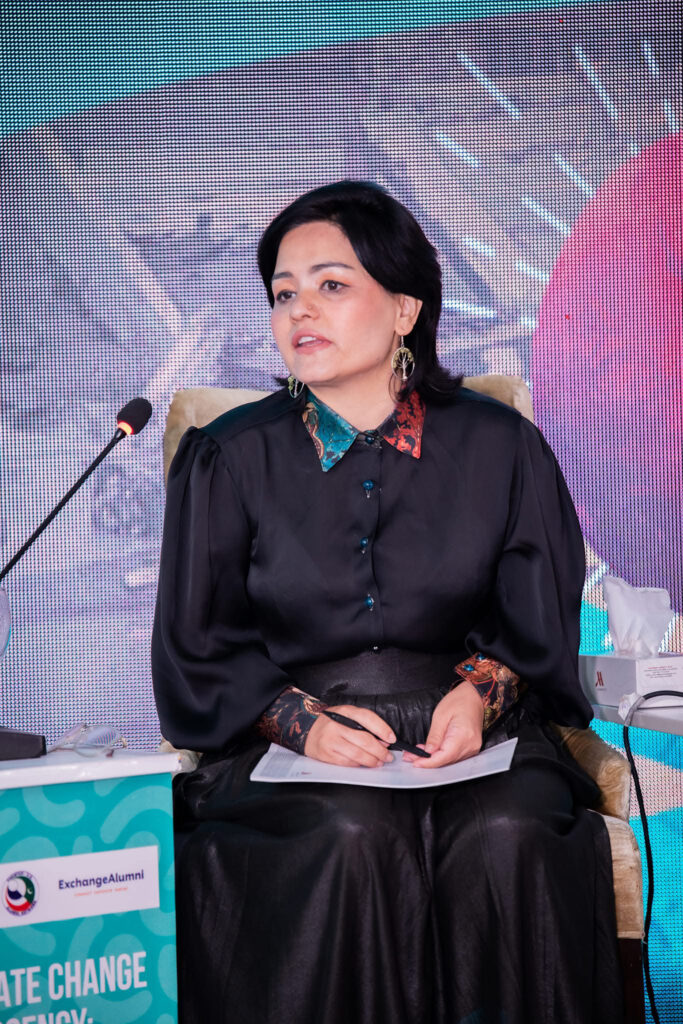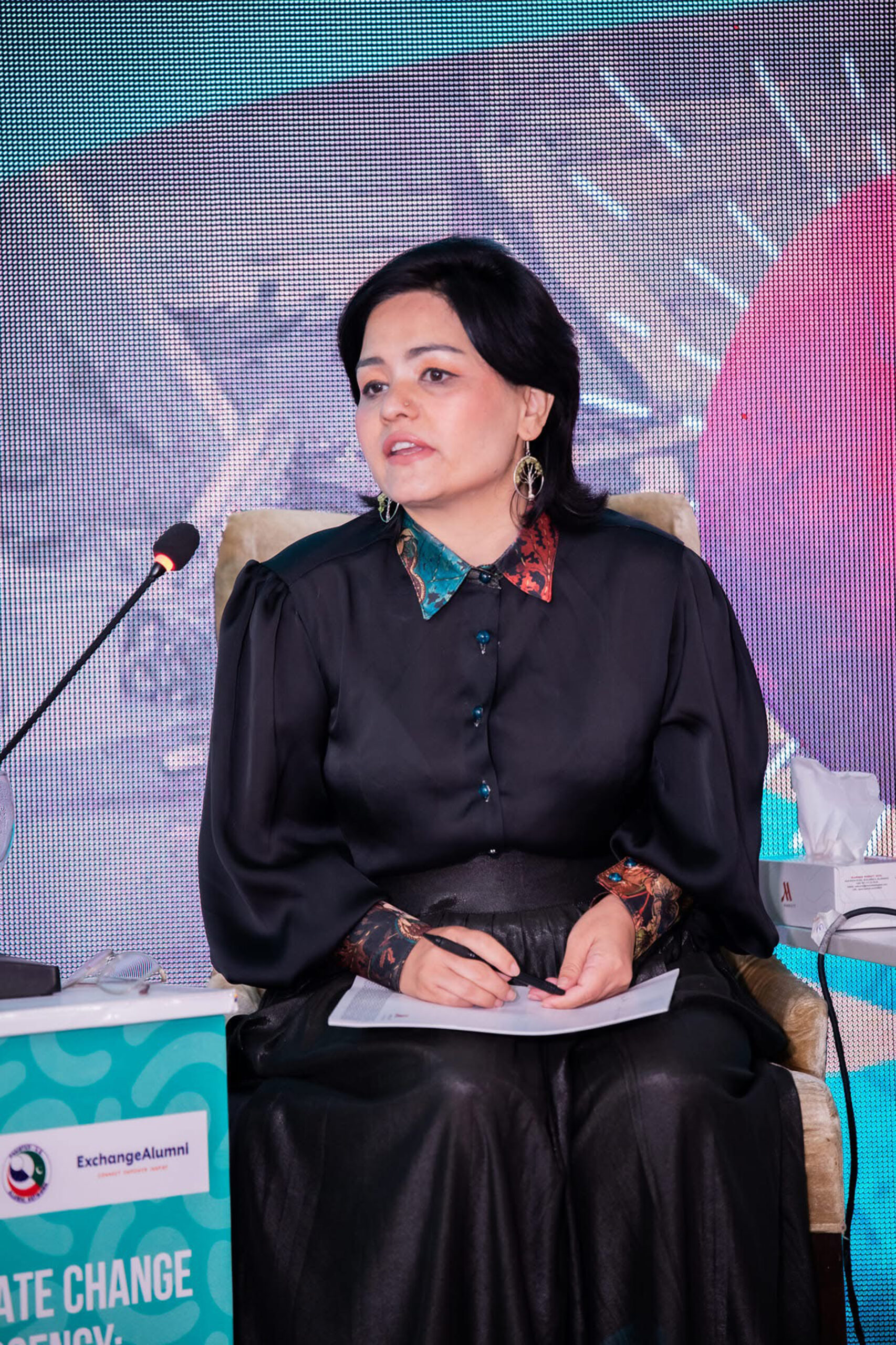
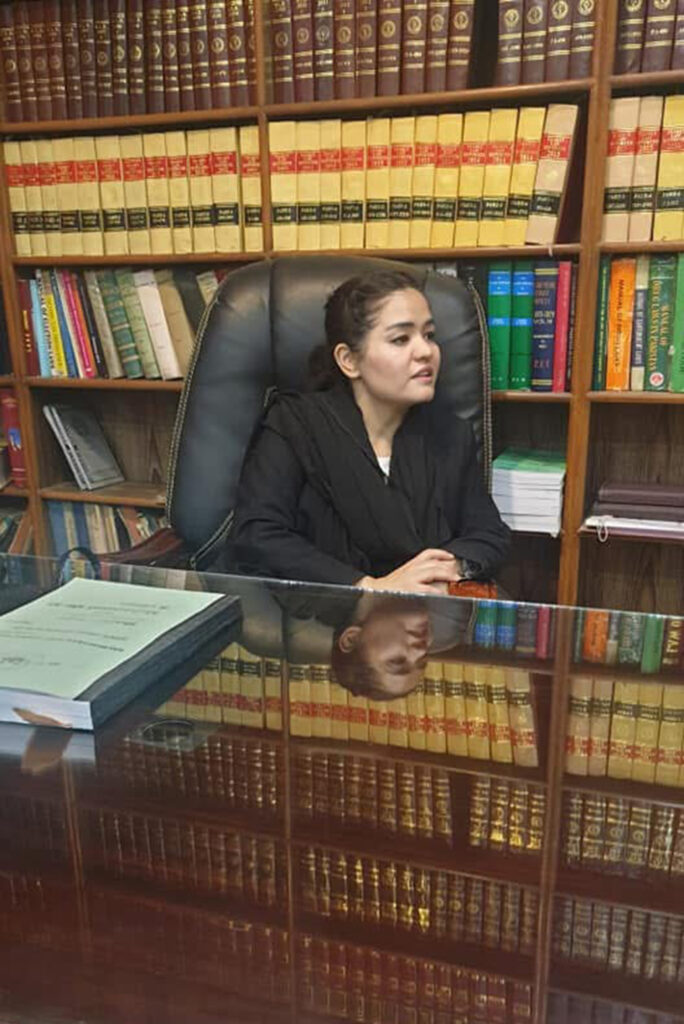
Right Livelihood Laureate Jalila Haider public speaking

Jalila Haider

Pakistan

Place of Birth: Quetta, Pakistan

Date of Birth: Dec 10, 1984

Education: University Law College, Quetta (LLB, 2010)

X: @Advjalila

Facebook: facebook.com/jalila.haider.3/

Contact us for interview requests and further information.

Awarded

Jalila Haider

“For breaking barriers, as the first female lawyer from her Hazara community, to challenge ethnic, state and patriarchal persecution, guided by the conviction that no human being is illegal.”

Jalila Haider is a Hazara human rights lawyer and activist protecting Pakistan’s most vulnerable communities against state repression, patriarchal norms and ethnic violence. In 2018, she led a seven-day hunger strike against the targeted killing of Hazaras that forced the Army Chief to negotiate directly with Hazara women, resulting in a sustained decrease in attacks against the community.

By combining legal work with street activism and community empowerment, Haider has secured justice for thousands targeted or ignored by those in power, specifically ethnic, gender and religious minorities, as well as refugees. Her law firm has also helped restore freedom of movement for more than 600 political activists and human rights defenders.

As a founding member of the Women’s Democratic Front (WDF), Haider helped pioneer Balochistan’s first Women’s March, a street mobilisation that sparked discussions on feminism across the deeply patriarchal region. Her organisation “We the Humans” has also helped over 400 widows of terrorism victims gain financial independence. Despite detention, cyber-harassment and death threats, she continues working toward a world where, in her words, “no human being is illegal.”

Justice is not an abstract principle. It is the dignity of being heard, the freedom to speak, and the right to live without fear. I will continue to use law, solidarity and my voice to make that dignity possible for others.

Jalila Haider

Biography

Haider is a Pakistani human rights lawyer and the first female lawyer from her persecuted Hazara community, confronting state repression, ethnic violence and patriarchal norms in Balochistan.

Through legal work, activism and community empowerment, she has compelled the state to protect her people, freed hundreds from wrongful terrorism charges, obtained justice for victims of gender-based violence and helped widows secure financial independence.
Living under siege

Pakistan was born out of the 1947 Partition of British India, when the subcontinent was divided largely along religious lines to create a homeland for its Muslim-majority population. This rupture triggered mass migration and killing on a scale that left an estimated one to two million dead. That founding logic — nationhood built on religious majority — has long complicated life for Pakistan’s ethnic and religious minorities, nowhere more so than in Balochistan, a province marked by ethnic insurgency, state repression and a deeply entrenched patriarchal tribal system.

Balochistan’s volatility stems from several forces operating at once. The province sits under the heavy presence of Pakistan’s military establishment, while non-state actors, including the Taliban and sectarian militias, operate alongside state forces, often unchecked. Among those caught in this crossfire are the Baloch people, an ethnic group native to Balochistan with whom Haider works closely. They face enforced disappearances and extrajudicial killings in a long-standing conflict driven by resource exploitation, political marginalisation and separatist insurgencies.

Haider knows this volatile landscape personally. Her own community, a Shia Muslim minority called the Hazaras, has been persecuted for centuries, dating back to a massacre campaign in 19th-century Afghanistan by Emir Abdur Rahman that scattered survivors into Quetta, Balochistan’s capital. Violence against Hazaras intensified greatly after 9/11, when the US invasion of Afghanistan once again pushed refugees across the border into Balochistan, and radical Sunni militants began a sustained campaign of bombings and targeted shootings against the community. Haider and other community leaders estimate that nearly 3,000 Hazaras have been killed since 1999.

Haider has described the toll on her community as an “invisible genocide,” noting that Hazara children are conditioned to expect death. Some, she has said, play by making “imaginary mass graves.” To protect the community from attacks, authorities have walled off two Hazara neighbourhoods on the outskirts of Quetta with military checkpoints and severe surveillance. Unable to safely own businesses, gain employment or complete higher education outside these enclaves, Hazaras’ socioeconomic standing continues to worsen.

“Hazaras are being made invisible,” Haider said. “Today, [we] still can’t safely attend university in Quetta because our distinct features make us targets for violence. Only those who can afford to leave for Punjab or Karachi can pursue higher education; the rest are being left behind.”

The first female Hazara lawyer

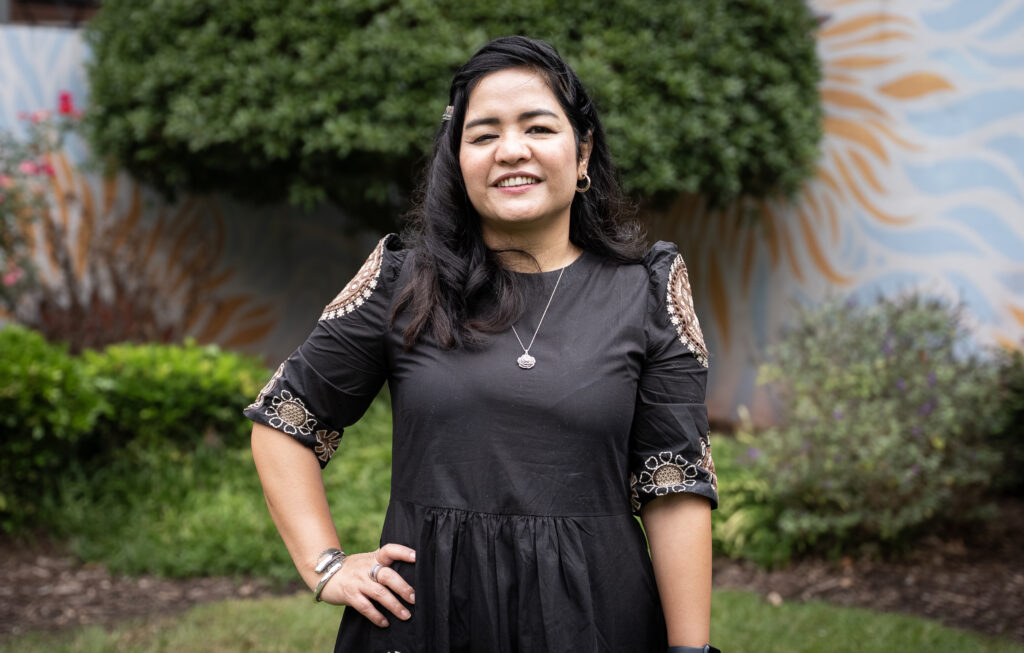
Born in 1984 into a middle-class Hazara family, Haider was raised by a father she describes as “a feminist and very progressive person,” who instilled in her the dream of becoming a lawyer. He passed away when Haider was only 12, leaving her mother to raise her and her five siblings alone. With her mother’s support, Haider enrolled at University Law College in 2007 and earned her law degree in 2010.

“Everything was in the hands of my mom,” said Haider. “She never worked. She never went to college or saw the world, but the way she raised us gave us the perspective to live with dignity.”

As the first Hazara woman in her law school, she was stalked and harassed online while violence against her community escalated around her. “There were always strikes and bomb blasts, but I never stopped going to school,” she recalled. “I would walk if the bus was not picking up Hazara people.”

A lawyer for all

Haider established a legal practice in 2011, taking on human rights cases others considered too dangerous or unprofitable. As of 2026, the firm has handled more than 7,000 cases. One of its ongoing battles is against the unjust seizure of assets, restriction of movement, and surveillance of political activists and human rights defenders.

“No lawyer was taking these cases,” Haider said. “No one wants to take the risk because they want to be a judge or a public prosecutor in the future. So, I told my team, we should go for these cases.”

Her firm has helped secure justice in 600 such cases, restoring freedom of movement to hundreds of families. Her most difficult case took six years: defending 15 Baloch boys falsely accused of terrorism. During this time, she survived a bomb blast targeting the legal community of Balochistan that killed 62 lawyers. She and other lawyers had gathered to mourn the Balochistan Bar Association President, who was assassinated just hours earlier.

Another focus for Haider’s law firm is prosecuting honour killings by challenging religious legal concepts that let perpetrators walk free. In 2025, she represented 30 women killed in the name of honour in Balochistan alone. Much of this work is made possible by Haider having built trust with local communities across ethnic and religious lines.

“Our voices have reached the villages,” she explained. “They contact us saying, ‘This girl is killed in the name of honour’ or ‘She is going through forced marriage.’ They are basically our allies that we have built in far-flung areas.” 

Her firm also provides free legal aid to women in divorce, custody and inheritance cases, and successfully represents Afghan refugees and transgender individuals facing deportation. 

Seven days that moved an army

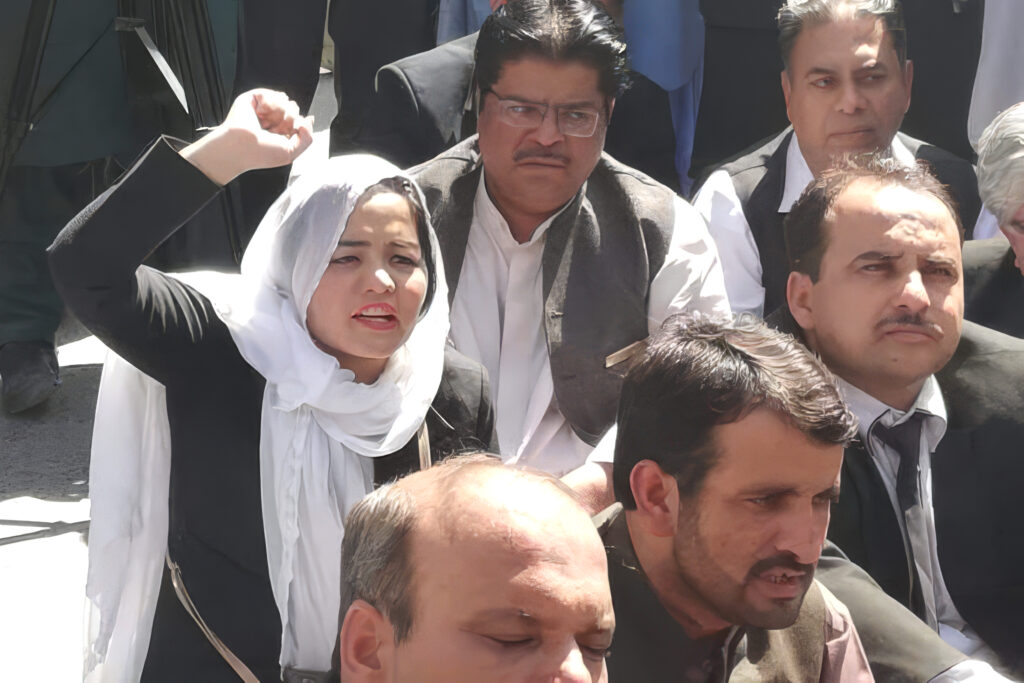
When the legal system stalls, Haider turns to street activism for justice. Her most consequential act of resistance came in 2018 when she led a hunger strike to end the targeted killing of Hazaras. Dissatisfied with Balochistan’s government officials’ ability to secure protection for her community, she decided to protest until Pakistan’s Army Chief, the country’s highest-ranking officer, negotiated with her directly.

Haider knew that such an extreme act by Hazara women would catch the media’s attention and bring shame to Balochistan’s patriarchal tribal leaders. She was right. After four days, the Chief came to Quetta to negotiate: the first time in history Hazara women’s protests achieved such high-level engagement. It resulted in a rare and sustained decrease in violent attacks against Hazaras for years.

“It was a conscious decision,” Haider said. “Knowing no women in Pakistani history had gone on a hunger strike unto death, I knew it would draw global and national attention and build solidarity…Politicians in Balochistan are helpless, and the military decides everything; no one was taking the Hazara’s identity-based genocide seriously.”

Haider has also engaged in mass protests and mobilisation to challenge Balochistan’s deeply entrenched patriarchy. In 2017, she co-founded the Women’s Democratic Front (WDF), an independent socialist-feminist organisation fighting for the emancipation of all women. After becoming the organisation’s Provincial President, Haider helped pioneer Balochistan’s first Women’s March, sparking public discussion of feminism in the region for the first time. 

Protecting human rights across Pakistan

Recognising that legal rights mean little without economic survival, Haider founded We the Humans in 2015. At its heart is a rug-weaving workshop employing 400 Hazara widows of terrorism victims, paying equal wages that meet international labour standards. The organisation also runs a free daycare, mandatory education for workers’ children, adult literacy classes and a “Circle of Empathy” addressing the intergenerational trauma of Hazara women living with PTSD.

A cornerstone of Haider’s community engagement is her collaboration with other organisations. In Balochistan, she has worked with local groups to raise awareness of online harassment and data protection for over 15,000 schoolgirls. 

Through partnerships with activists and groups like the National Commission for Human Rights and the National Commission for Minority Rights, Haider has also influenced national legislation. She consulted on the Transgender Law of 2019, which allowed transgender individuals to self-identify on ID cards and secure their inheritance rights. She also played a crucial role in drafting the Early Child Marriage Act in Balochistan, setting the marriage age to 18 for both boys and girls.

Commenting on the work she did with local religious leaders and community members to pass the Transgender Law, Haider said: “We told them, ‘If they don’t have rights, can’t go to school, or get equal jobs, they are forced into prostitution’ … So, when the federal law faced backlash elsewhere, it didn’t in Balochistan because we worked with different groups. Instead of using hard medical terminology that common people don’t understand, we spoke in their language.”

A future where no human is illegal

Looking to the future, Haider imagines a world where “no human being is illegal”, and Hazaras can live freely as the peaceful people they are. Her unwavering commitment to those targeted or ignored by authorities has earned her the label of being ‘anti-state’, yet she remains adamant that her only allegiance is to Pakistan’s people and the rule of law.

“I believe in the rule of law,” said Haider. “A fair trial is everyone’s right. Whether you like it or not, it is written in your constitution and your laws. I am a sympathiser of the state of Pakistan. I want to protect its rule of law and uphold its constitution so that it presents a real democratic face to the world.”

At the core of Haider’s work is her belief that human rights are inalienable, regardless of gender expression, ethnicity or religious background.

“Human rights are universal rights for everyone: child, woman, man, girl, or transgender, regardless of ethnicity,” she said. “Even for those ethnicities that are sometimes involved in the persecution of my community, I cannot undermine their rights because they are universal. I choose them for everyone, even those who do wrong to me.”