Awarded
Georgian Young Lawyers’ Association
“For building and safeguarding Georgian democracy and sustaining civic power in the face of an autocratic crackdown.”
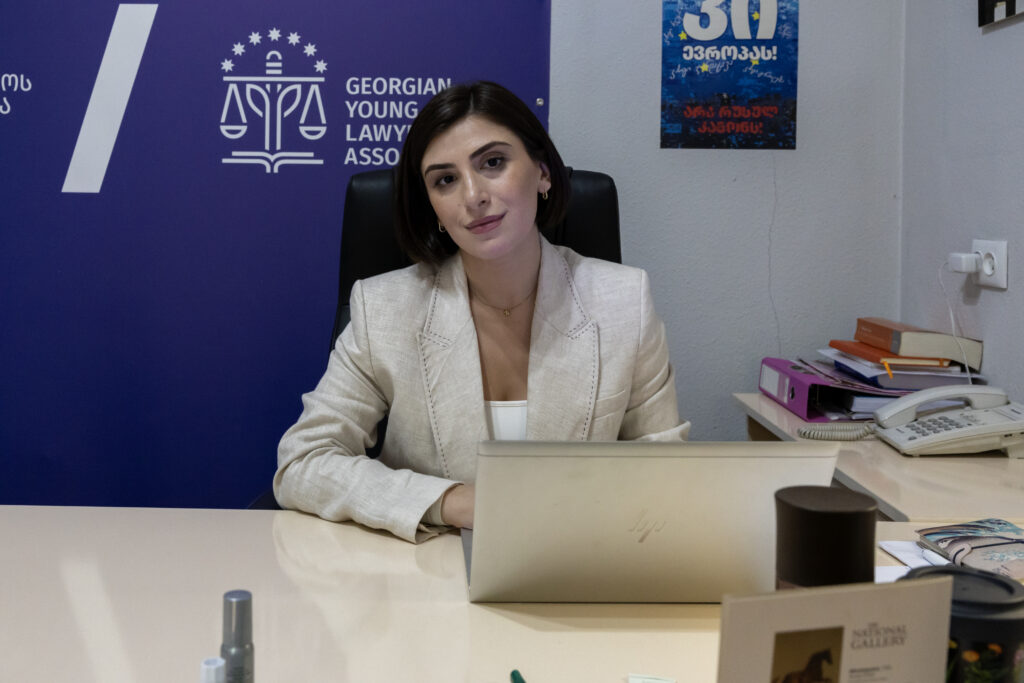
The Georgian Young Lawyers’ Association (GYLA) is Georgia’s oldest and most prominent human rights organisation, founded in 1994 by volunteer lawyers who helped draft the country’s first post-independence constitution. In the decades since, the organisation has played a crucial role in the country’s democratisation, earning the recognition as the moral compass of Georgian society.
GYLA’s work ranges from providing grassroots legal aid to working at the national and international levels to uphold human rights. It has secured landmark legal victories that reshaped national policy, from ensuring rights for people with disabilities to guaranteeing free education to every child in Georgia and compelling compensation for Soviet-era repression. It has provided 1.5 million free legal aid consultations – in a country with 3.7 million inhabitants – and served as the backbone of the country’s civil society.
Despite facing severe repression under Georgia’s new “foreign agents” laws, GYLA has chosen to remain in the country. It continues with a scaled-down team, focusing on the most pressing human rights work. With courage and determination, the organisation presses on for a better future for all Georgians.
In Georgia, there is autocratic consolidation, but there is also resilience among the people: resilience that comes at a very high cost.
Tamar Oniani, GYLA’s Chairperson
Biography
As Georgia’s oldest human rights organisation, GYLA has strengthened the country’s democracy for decades. With growing government repression, it’s one of the only NGOs still standing to uphold human rights.


Georgia: A fragile democracy in the eye of an autocratic storm
A former part of the Soviet Union, Georgia gained independence in 1991, charting a course towards democratisation. The country undertook wide-ranging reforms to its state institutions, courts and economy and, in 2022, applied for European Union membership.
However, after Russia’s full-scale invasion of Ukraine in 2022, keeping a pro-European stance became disputed. The populist Georgian Dream party took advantage of the situation, claiming victory in the October 2024 parliamentary elections, which national and international observers described as “fundamentally flawed”. Watchdogs have reported Russian meddling in the elections by spreading conspiracy theories.
Two days after Georgian Dream declared victory, protests broke out demanding a recount of votes and new elections. The protesters and journalists covering the demonstrations were met with violence by the police and groups affiliated with the government. In February 2025, the European Parliament declared the election results illegitimate.
Observers, including from the Council of Europe and the Organization for Security and Co-operation in Europe (OSCE), have since warned of a serious democratic backsliding in Georgia: the government suspended its preparations for EU accession and began a crackdown on civil society organisations by passing laws to limit foreign funding. Such “foreign agents” laws are often used by authoritarian governments around the world to restrict the work of non-governmental organisations, which often rely on funding from abroad. Under Georgia’s law, organisations must register and seek approval for foreign grants, and individuals working for them could even end up in prison.
This has had a dramatic impact on Georgian civil society, with almost all organisations having to cease operations or relocate their staff abroad.
GYLA: “Strengthening the rule of law and democracy”
GYLA was founded in 1994 by a group of young lawyers who volunteered during the drafting of Georgia’s first post-independence constitution. Tamar Oniani, the current Chairperson of GYLA, said that the organisation’s statutory goal of “strengthening the rule of law and democracy” has remained its motto for three decades.
The organisation itself is a model of democratic decision-making: it is governed by a General Assembly of over 450 members, who elect a 21-member Board. The Board, in turn, elects the Chairperson for a one-year term, and the same person may stand for election for up to three consecutive terms. The mandatory rotation of the Chairperson infuses the organisation with new ideas and energy while also giving young lawyers opportunities to advance and grow within the organisation.
“A person can start as a volunteer and end up as a Chairperson: it’s really amazing,” said Levan Katamadze, of GYLA Communications.
The backbone of Georgian civil society
Before the crackdown on civil society, GYLA operated through an interconnected legal chain: individual cases identified through grassroots legal aid revealed broader, systemic problems; these findings informed legal analysis and professional training; and the most significant issues were then pursued through strategic litigation in national and international courts. Each stage fed into the next, turning individual legal support into wider institutional and social change.
Providing free legal aid through a network of lawyers has proven to be a lifeline for many Georgian citizens and activists. Originally operating with nine regional offices (all of which had to be closed by 2026 due to the “foreign agents” laws), the aid was designed to be accessible to everyone, especially the most vulnerable populations in the country. People could walk in for a consultation on a range of issues, including pensions, loans, prisoners’ rights and domestic violence.
“Even lawyers were coming to our offices for legal consultations because of the trustworthy service and the ethical integrity that our organisation has always had,” said Oniani.
Another way GYLA has shaped Georgian democracy is through its educational work in different areas of law and its coveted internship programme. In Georgia, interning at GYLA is one of the best opportunities for law students to get hands-on experience. That means that most Georgian lawyers practising today have spent time working for GYLA. In fact, the organisation has become so prominent in Georgian society that many young people study law solely to work for GYLA.
“I was watching GYLA as a kid; GYLA was everywhere where key human rights violations were happening,” Oniani said. “I always had in mind that yes, that is the organisation where I see myself. Then during university, I started an internship at GYLA: you had to slay a dragon to get there because there was such huge competition.”
GYLA also serves as a watchdog, documenting human rights abuses and monitoring key public institutions and elections. Historically, that included monitoring the High Council of Justice, the supreme oversight body responsible for regulating the judiciary in Georgia, and criminal trials, to analyse their functioning and issue reports with recommendations. GYLA has also documented torture and ill-treatment during protests and a range of other human rights violations.
Strategic litigation has been the apex of GYLA’s operational chain, aiming to dismantle systemic violations and force structural reform. At the national level, the organisation has used the Constitutional Court to directly invalidate unconstitutional laws, triggering immediate legislative changes. Because of GYLA’s litigation, persons with disabilities gained the right to marry. Children who are not Georgian citizens can now attend public school for free.
GYLA has also brought cases before the European Court of Human Rights, often serving as the legal coordinator for the broader civil society sector. It has even managed technically complex applications simultaneously for over 120 NGOs and individuals. Rulings handed down by the court in Strasbourg have forced the government to strengthen environmental protection, pay compensation to victims of Soviet-era violations, and enact police reform, including by establishing binding European standards on the use of rubber bullets.
GYLA has also represented victims and survivors of the 2008 Russo-Georgian war before the European court. The organisation has filed more than 50 complaints on behalf of 400 persons. In a landmark case filed by GYLA, the court found Russia guilty of killing and torturing Georgian soldier Giorgi Antsukhelidze, who was posthumously honoured as a National Hero.
Holding back the autocratic tide even under pressure
GYLA’s work has shifted dramatically since the 2024 elections.
During the protests that broke out after the fraudulent elections, the organisation had to quickly adapt its infrastructure: in coordination with other civil society organisations, GYLA set up a 24/7 hotline that dispatched lawyers to detention centres whenever protesters were arrested, ensuring they had legal counsel when facing authorities.
The emboldened populist government also began dramatically curtailing the work of civil society organisations. Three laws in particular have been used to target NGOs: the “Foreign Agents” law requiring registration for organisations receiving over 20 per cent foreign funding; an amendment introducing individual criminal liability for staff receiving foreign grant-funded salaries; and the March 2025 grant control law, which requires approval from the office of the Prime Minister for all foreign grants. These have created a harsh environment for NGOs, especially as even receiving a foreign grant-funded salary can land a staff member in prison.
Despite being forced to close all its regional offices and suspend monitoring, legal education and network coordination activities, GYLA continues to document the most pressing human rights violations and pursue strategic litigation before both national and international courts.
“What is possible to do, and what we prioritise right now to do, is the watchdog activities,” said Oniani. “When none of the domestic institutions is aiming at protecting justice, gathering evidence plays a key role in ensuring accountability and raising awareness.”
GYLA also had to suspend all of its legal aid services across the country, however, it has been able to restore free legal consultations once a week at its Tbilisi office after its board members and staff decided to do it on a voluntary basis to provide a lifeline to people in need of legal support.
GYLA’s staff members have received threats and have been branded as traitors for speaking up against human rights violations. The organisation’s headquarters have been vandalised.
Despite the risks, the threats and harassment, GYLA perseveres.
“With this work, I believe that I serve my country,” Oniani said. “If we step back as human rights defenders, then what should vulnerable people do? The special protective effect that human rights defenders have for these communities places a burden on us to continue.”