HOME

Bekanntgabe der Preisträger*innen 2026

Rural Women’s Assembly

Rural Women’s Assembly

Südliches Afrika

Hauptsitz: Kapstadt, Südafrika

Gegründet: 2009

Website: ruralwomensassembly.org

Facebook: @SARuralWomen

Melden Sie sich gern für Interviewanfragen und weitere Informationen.

Awarded

Rural Women’s Assembly

„Weil sie als geeinte Bewegung von Kleinbäuerinnen Land und Saatgut gegen die Enteignung durch internationale Konzerne und körperliche Selbstbestimmung gegen patriarchale Strukturen verteidigt.“

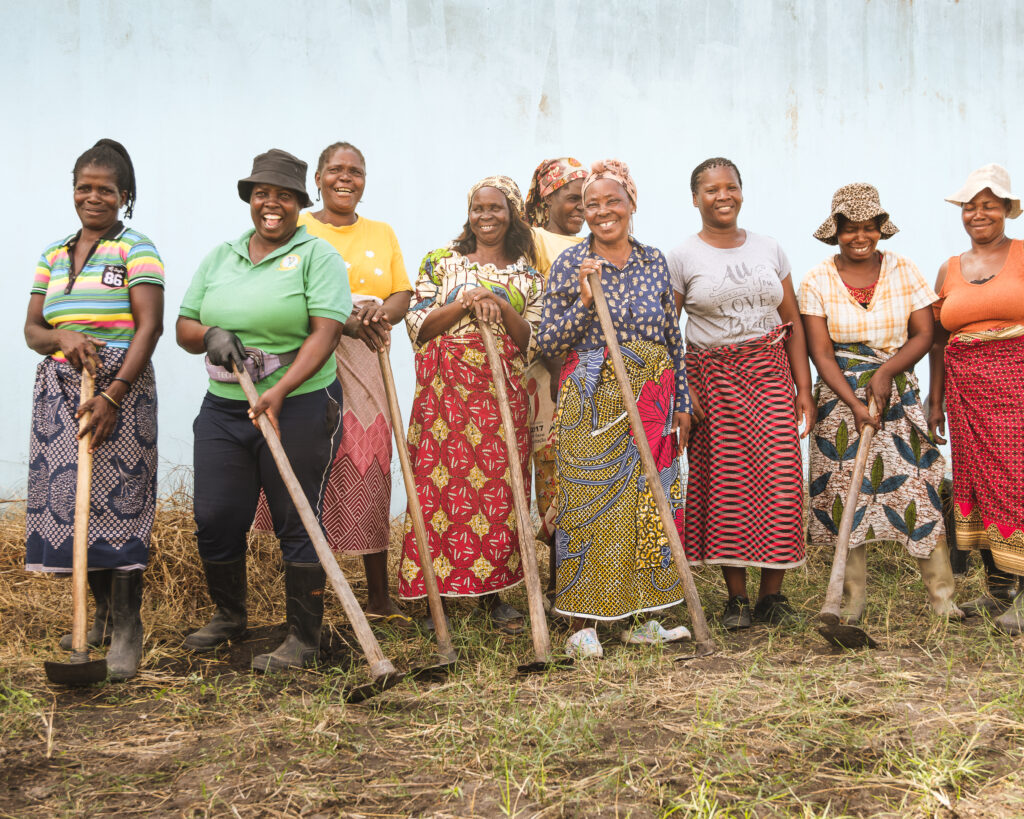
The Rural Women’s Assembly vereint als selbstorganisierte, grenzübergreifende Bewegung mehr als 178.000 Kleinbäuerinnen in elf Ländern des südlichen Afrikas. Gemeinsam verteidigen sie Land und Saatgut gegen die Interessen großer Agrarkonzerne und körperliche Selbstbestimmung gegen patriarchale Strukturen. Statt auf eine herkömmliche NGO-Struktur setzt die Bewegung auf eine flache, ehrenamtlich getragene Organisationsform. Auf diese Weise ist eine der größten unabhängigen Plattformen für Landfrauen in der Region entstanden, bekannt als „Guardians of Land, Life, Seed and Love“.

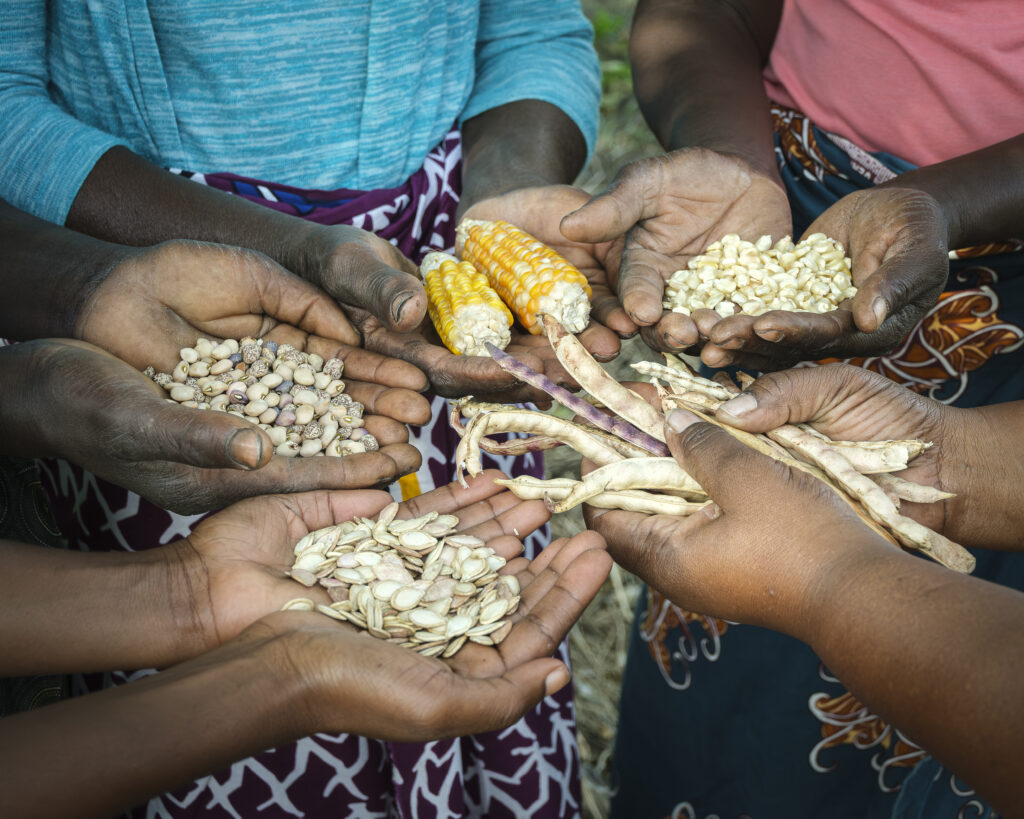
Durch feministische Agrarökologie sowie Ernährung- und Saatgutsouveränität widersetzt sich RWA der Kontrolle regionaler Ernährungssysteme durch internationale Konzerne und stärkt die Widerstandsfähigkeit gegen die Auswirkungen der Klimakatastrophe. Die Bewegung hat 24 Saatgutvermehrungsbetriebeaufgebaut und hunderte einheimische Saatgutsorten katalogisiert, um traditionelle Saatgutsysteme vor Kommerzialisierung zu schützen.

Durch vielfältige, länderübergreifende Unterstützungsstrukturen hat RWA Frauen, denen Landbesitz lange verwehrt blieb, zu einer geeinten und unüberhörbaren politischen Stimme zusammengeführt. Diese hat unter anderem 2016 in Sambia zu einem Gesetz beigetragen, das die gleichberechtigte Landvergabe an Frauen vorsieht, sowie 2018 zum wegweisenden Gesetz gegen sexualisierte und häusliche Gewalt in Eswatini.

We are the guardians of land, life, seed and love.

Rural Women’s Assembly

Biography (in English)

The Rural Women’s Assembly is a transnational movement of over 178,000 small-scale farmers across eleven Southern African nations, resisting corporate land grabs and patriarchy to achieve food security and defend bodily autonomy.

Through feminist agroecology, seed sovereignty and grassroots organising, it has turned rural women into an independent political force reshaping land rights and food systems across the region.
The legacy of settler-colonial rule

Southern Africa is a region shaped by a shared history of settler-colonial rule. What distinguishes it from the larger continent is the scale and permanence of European settlement, which led not only to political control but to the outright seizure of farmable land. Across the region, settlers took fertile land and redistributed it among themselves, while local populations were confined to smaller, poorer areas. Men were consequently forced to work in mines or on settlers’ land, leaving women to carry the bulk of subsistence farming. As a result, rural women rely heavily on natural resources and agriculture for their livelihoods, yet are often denied formal land ownership, as well as access to credit, technology and decision-making forums.

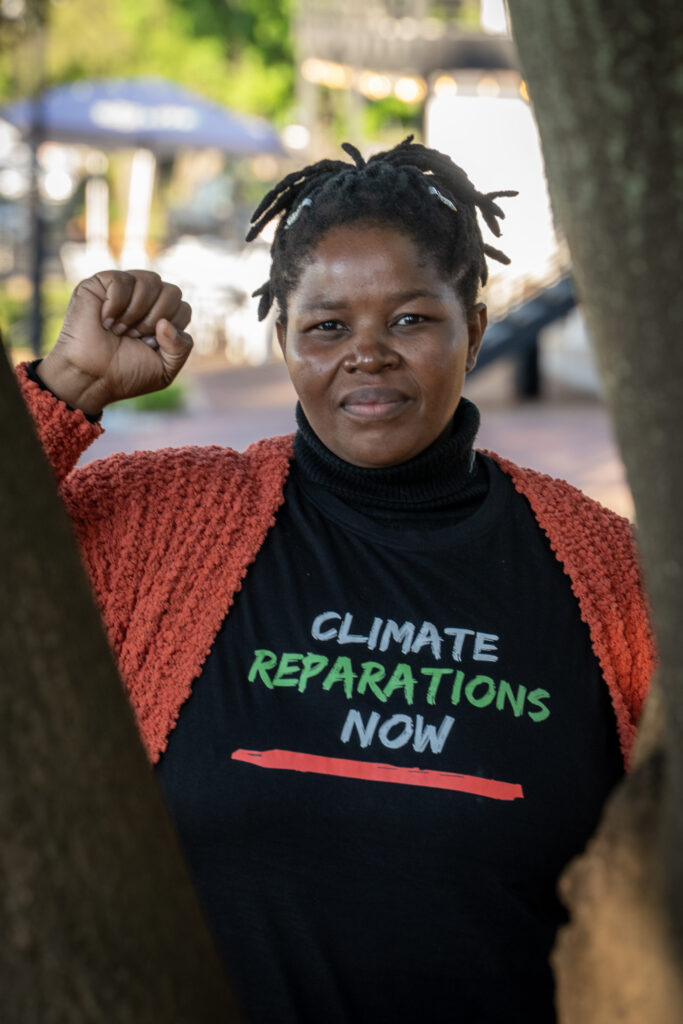
RWA’s Regional Coordinator Mercia Andrews explained that Southern African women’s situation is further complicated by the fact that their land sits “in the eye of the needle” of the climate crisis. In 2026 alone, Madagascar was struck by two major cyclones, with storms tracking onto Mauritius, Malawi, Mozambique and South Africa, as the region’s West Coast endures extreme drought. Southern Africa is also experiencing soil and water degradation and biodiversity loss, leading to mass displacement.

Extractive industries and corporate agribusiness in the region compound these environmental barriers. Through legal frameworks like the 1991 Act of the UPOV Convention, corporations claim intellectual property rights over seed varieties, threatening farmers‘ ability to freely save, exchange and sell their own seeds. Large-scale land grabs for extractive materials are also linked to a rise in gender-based violence, creating a backdrop of structural violence.

Guardians of land, life, seed and love

The region’s painful colonial history and exploitative power structures have been visible in RWA’s story since the beginning. In 2009, the movement held its first meeting, with 250 rural women from across the region gathering in Limpopo Province, South Africa, to overcome lingering colonial and apartheid divisions between member countries.

Its founders set three goals: to build a new regionalism connecting women across borders, to create a shared platform against crises like food poverty and land dispossession, and to confront the HIV-AIDS pandemic. From this came the movement’s defining structure: a flat, volunteer-led model governed by a Reference Group of three leaders from each of its eleven country chapters. The movement currently operates in Eswatini, Lesotho, Madagascar, Malawi, Mauritius, Mozambique, Namibia, South Africa, Tanzania, Zambia and Zimbabwe.

Feminist agroecology and seed sovereignty

RWA practices feminist agroecology, a holistic approach linking the ecological transformation of food systems to the social relationships that sustain them. Beyond sustainable farming or increasing women’s role in value chains, its core goal is women’s autonomy: securing their access to and control over land, water, seeds and income, ensuring their voice in decision-making, and recognising their Indigenous knowledge and political agency.

It also confronts what sustains inequality in the first place — the gendered division of labour, the unpaid burden of domestic and care work, and the violence and domination that run through households, communities and institutions — toward a food system built on equity and justice at every level. It defends the agricultural commons against what it calls „neoliberal frameworks“ and the „NGOisation“ that depoliticises rural struggle.

The movement’s agroecology work grew out of a demand from its own members. After an initial focus on rights advocacy, members told RWA, „We’ve heard about our rights, but we do not eat our rights.“ In response, RWA began organising an Agroecology School for its members to learn about these holistic strategies. As a result, members have lowered production costs by replacing synthetic fertilisers with natural resources, while building climate resilience through healthier, water-retaining soils and diverse crop systems that withstand extreme weather.

In 2025, the movement further fortified members’ knowledge of their seed and land rights by translating the UN Declaration on the Rights of Peasants (UNDROP) into local languages. Over 18,000 women participated.

As “seed guardians”, RWA has established seed banks and multiplication sites propagating traditional seed for exchange and sale to members. In 2025, it conducted research documenting 45 cereals, 31 fruits, 64 legumes and 20 tubers across seven countries, with 720 participating women. The findings of this research were shared internationally through a photo-documentary exhibition, “Guardians of Land, Seed and Life”, making rural women farmers visible in their roles as seed savers, guardians of local knowledge and the backbones of local food systems.

Building a movement of “rowdy” women

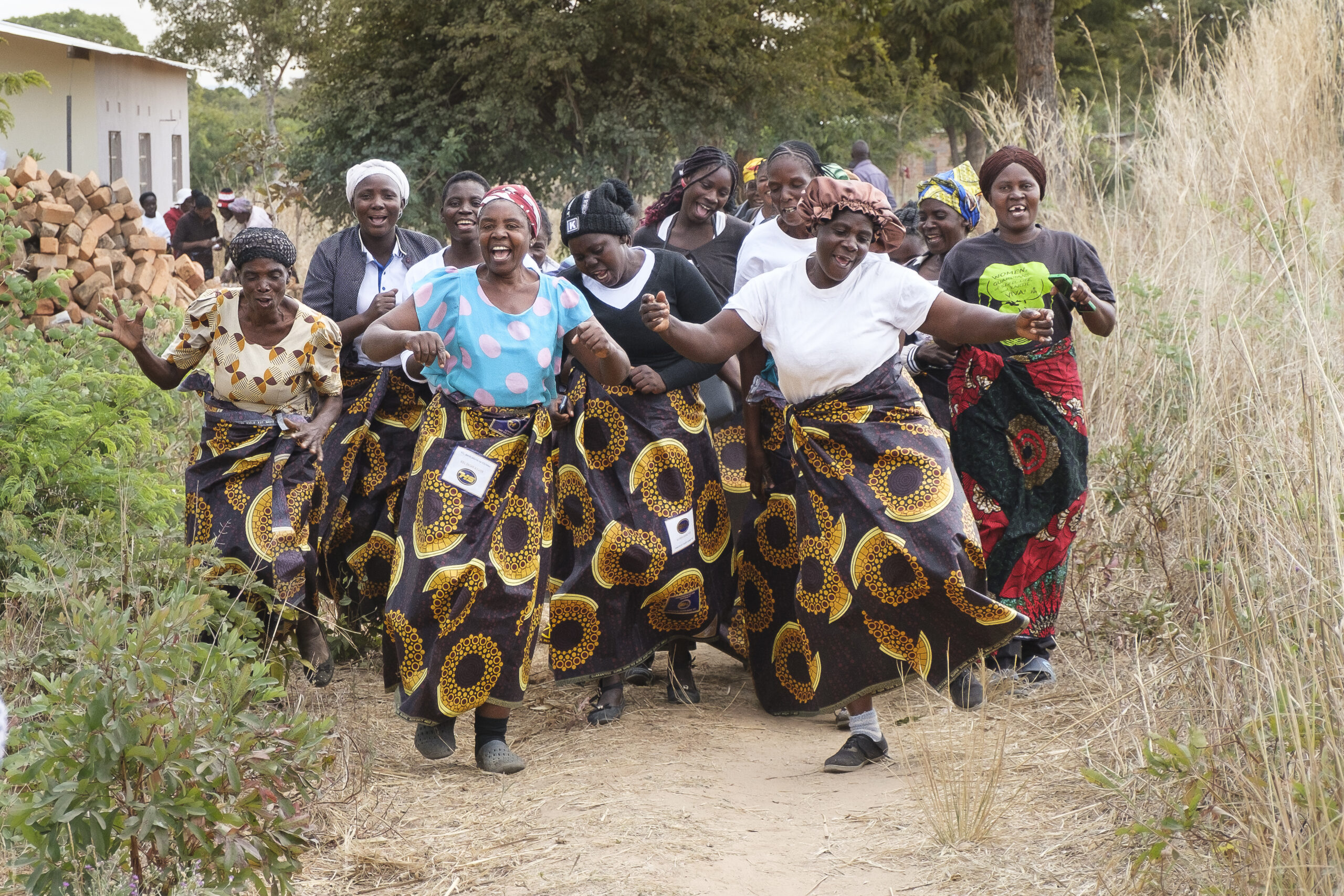
Each year, RWA convenes a Feminist School, a week-long gathering built to develop a feminist consciousness and shared identity across its eleven country chapters. „We are all African eco-feminists, we are pan-Africanists, we have a common philosophy of the RWA,“ Andrews said, explaining the importance of having a common philosophy and understanding of the world they are setting out to change. „We are the guardians of land and life and seed. We fight patriarchy.“

The school is complemented by a fortnightly online course that can draw 300 to 400 women across the region at once. Andrews is among the educators, alongside external facilitators and a team built through what she calls a „training of trainers,“ so that no school depends on one voice. These gatherings have opened conversations rarely held elsewhere, from sessions on reproductive health and bodily awareness to queerness and sexuality.

RWA’s feminist education is matched by persistent, sometimes “rowdy”, action at the village level. In the South African province Limpopo, when a traditional authority refused a widow land to bury her husband, thirty RWA members loaded his coffin into a hearse, carried it into the chief’s office, and told him: „Since you don’t want this man to rest, we will bring him here to you, so that you can be as restless as he is.“ Within the hour, the land was granted.

In Namibia, after government fencing meant to keep elephants from destroying crops went unrepaired for years, members pushed a government vehicle into the elephants‘ nightly path. „We want to live in harmony with wildlife,“ Andrews recounted, „but if you are not going to help, … we are going to show you what we experience on a daily basis.“ The tactic forced an agreement to erect proper fencing. Andrews calls actions like these „weapons of the weak“: small, cumulative victories that build women’s confidence that „they can, as a collective, make gains.“

Affecting policy across the region

In addition to local-level victories, RWA delivers concrete legal change. The movement lobbied to help pass Eswatini’s 2018 Sexual Offences and Domestic Violence Bill and a 2016 Zambian law mandating equal land allocation. 

The movement also secured a landmark ruling allowing women in Eswatini to register land in their own name — a right won through the case of one RWA member. When she lost her parents, an uncle seized the family’s land and tried to evict her and her sisters. They refused to leave, continued farming and chased him off whenever he returned, while pursuing a legal case to contest the customary law that barred widows and daughters from inheriting land. After years in court, and with RWA’s support, they won.

RWA has used the same pressure against extractive industries. The movement was part of a coalition that took Shell to court over ocean-floor mining off South Africa’s coast, leading the country’s Constitutional Court to rule for the first time that such mining could cause environmental destruction. 

„We often say to take the legal route is okay,“ Andrews said. „But it has to be combined with activism, because if you don’t put pressure… it doesn’t hold too much water. And most importantly, our actions have to inspire and build hope.”

People-to-people solidarity

Healing Circles are one method RWA uses to create safe spaces for women to share experiences of trauma. They grew out of participatory research the movement conducted across eight countries to understand what support rural women could actually access when facing gender-based violence, domestic violence or serious sexual offences. Despite ambitious government promises, RWA found that services were extremely difficult for rural women to reach, so the movement built its own, training community counsellors, known as „GBV champions,“ to work in schools and communities and run Healing Circles for women to share their experiences.

The same ethic of solidarity drives RWA’s cross-border mutual aid. Members from Zambia have travelled to Malawi to deliver seeds and provisions after climate shocks; in Mozambique, women from the north travelled south to help rebuild flooded fields. In South Africa, RWA members have repeatedly collected funds, food and other essentials to support women after climate disasters and fires have left people without homes. In Eswatini, members mobilised during the 2021 unrest to support women who had been shot. It is what RWA calls „people to people solidarity“: support built on presence and shared labour, not money alone. 

„We have our own answers,“ Andrews said. „We save seeds. We’re the custodians of the food system… People must understand the difference between charity and solidarity.“