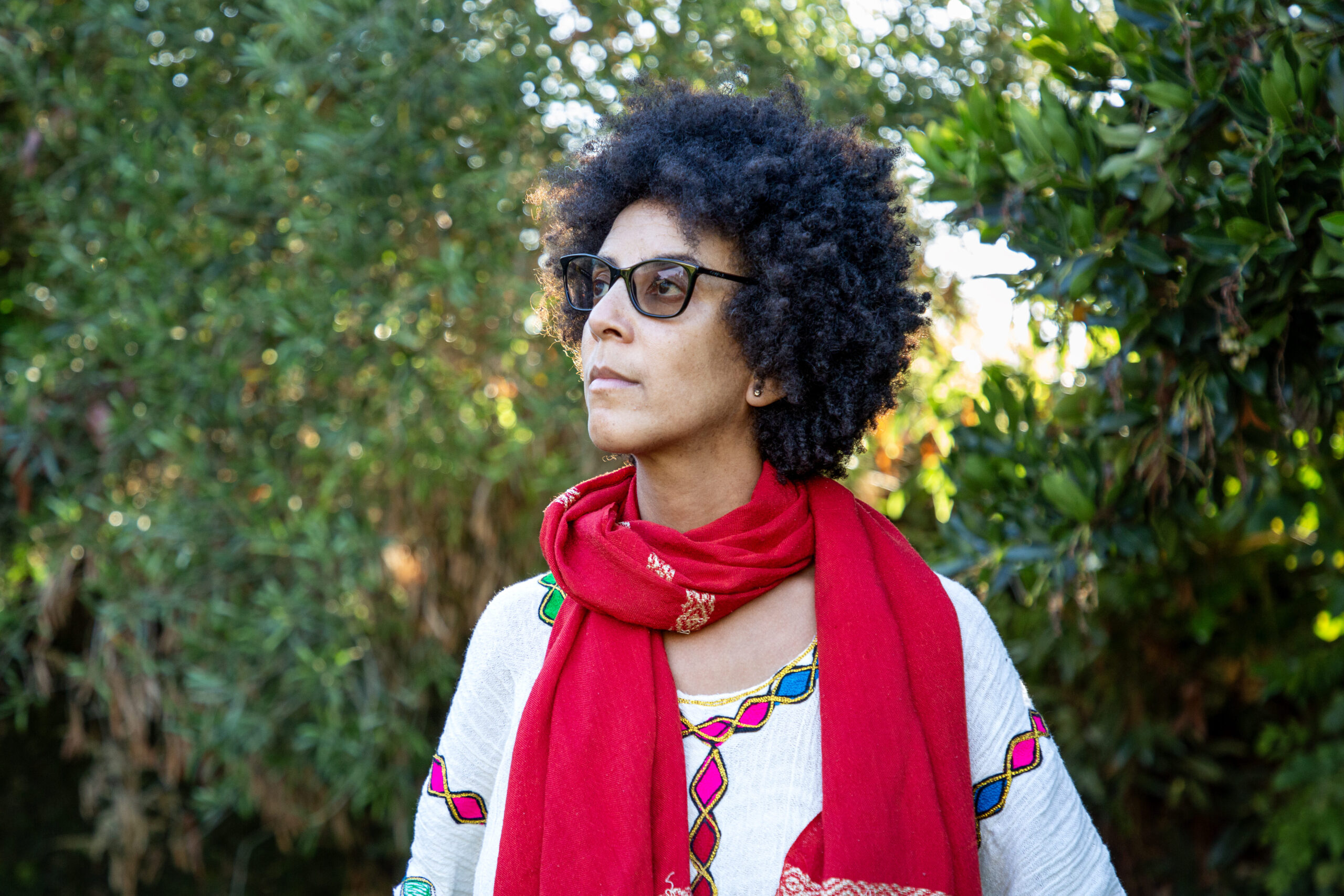
Timnit Gebru
USA
Lugar de nacimiento: Etiopia
Fecha de nacimiento: 1983
Educación: Doctora en Ingeniería Eléctrica, Universidad de Stanford
X: @timnitGebru
DAIR
Sede: California, Estados Unidos
Fudada en: 2 de diciembre de 2021
Sitio web: dair-institute.org
Póngase en contacto con nosotros para solicitudes de entrevistas y más información.
PREMIADA EN
Timnit Gebru
“Por desafiar la concentración de poder en la inteligencia artificial y promover una tecnología digital arraigada en la justicia, la experiencia vivida y la capacidad de acción de las personas.”
Timnit Gebru es una investigadora estadounidense especializada en Inteligencia Artificial y fundadora del Instituto de Investigación de Inteligencia Artificial Distribuida (DAIR, por Distributed Artificial Intelligence Research Institute). Su trabajo cuestiona la concentración de poder en el sector tecnológico y expone los daños que los sistemas de inteligencia artificial ya están causando en la vida cotidiana de las personas, en particular entre comunidades que enfrentan discriminación y exclusión. Sus investigaciones han contribuido a transformar los debates internacionales sobre cómo se desarrolla y gobierna la inteligencia artificial y con qué fines.
Nacida en Etiopía en una familia de origen eritreo, Gebru dejó el país a los 15 años durante la guerra entre Etiopía y Eritrea y posteriormente solicitó asilo en Estados Unidos. Las experiencias de discriminación que atravesó a lo largo de su vida moldearon su comprensión de que la ciencia y la tecnología no son neutrales y pueden reproducir las desigualdades existentes. Gebru cofundó Black in AI para crear comunidad y aumentar la presencia de personas negras en este campo. Tras una disputa por un artículo académico pionero que advertía sobre los riesgos de los grandes modelos de lenguaje, fue despedida de Google, donde codirigía el equipo de IA Ética.
A través de DAIR, Gebru actualmente combina la denuncia de los sesgos tecnológicos con la construcción de alternativas. Su modelo distribuido reúne a personas colaboradoras e investigadoras de distintos países y continentes, desafiando las concepciones centralizadas e impulsadas por intereses corporativos que predominan en la inteligencia artificial. La investigación arraigada en las comunidades permite ampliar quiénes pueden participar en la construcción de la tecnología y en la definición de los propósitos y valores que orientan su futuro.
Let’s not talk about machines like they have their own life or agency. Let’s talk about who are creating them and what their responsibilities are.
Timnit Gebru
Biography
While AI leaders present artificial intelligence as a neutral and inevitable force, Timnit Gebru makes visible what this narrative obscures: technology can reproduce and deepen existing domination, exploitation and exclusion, while imposing growing costs on people and the planet. Her work cultivates agency, resistance and imagination to build alternatives — and a technological future shaped by human needs, creativity and justice.



Looking for a safe space
Growing up in Ethiopia within a family of engineers, Timnit Gebru found early refuge in the certainty of numbers and physics. With her father as an electrical engineer and her older sisters following the same path, science offered a stable sanctuary from the world’s disorder.
At age 15, the Ethiopian-Eritrean war forced her into exile, leading her through Ireland before she eventually sought asylum in the United States. A painful paradox marked this period of statelessness: being granted entry while simultaneously being made to feel unwanted.
Her understanding of and reliance on science evolved significantly over time. Initially facing attempts to discourage or exclude her from scientific institutions, she later uncovered the deep-seated biases embedded within technology itself. This journey culminated in her raising the alarm against a powerful minority introducing eugenic principles into the tech sector. She set out to address that imbalance and build better alternatives with communities.
Science reproducing exclusion
As artificial intelligence expanded rapidly in the mid-2010s, she began seeing disturbing racial biases: Google Photos labelled Black individuals as gorillas, while research showed that facial-detection systems performed poorly on Black faces. Meanwhile, Gebru would attend supposedly international AI conferences and see almost no other Black people.
Exclusion, she realised, was not only happening around technology. It became embedded within it, carrying the histories, assumptions and hegemonic values of the institutions that produced it.
“I was kind of trying to escape from the world in the science, and I realised that the science itself is actually the world I was trying to escape from,” Gebru said.
In 2017, Gebru co-founded Black in AI, creating a community for Black people working in the field and helping increase their presence and influence. The organisation later helped bring a major international AI conference to Africa for the first time, in Rwanda in 2023.
Knowledge rooted in experience
Gebru also began questioning a technology sector increasingly captivated by artificial general intelligence (AGI) and visions of machines that would surpass humanity. In her research, she traced the underlying transhumanist ideas to the history of eugenics. She questioned who these tech-utopias are developed by and who they are developed for, and drew attention to people already being harmed.
Her research warned about biased datasets, environmental costs and other risks associated with increasingly large language models. In 2020, while serving as co-lead of Google’s Ethical AI team, she co-authored a pioneering paper on these risks. The company asked her to retract it or remove her name. She was fired after refusing to do so without certain guarantees.
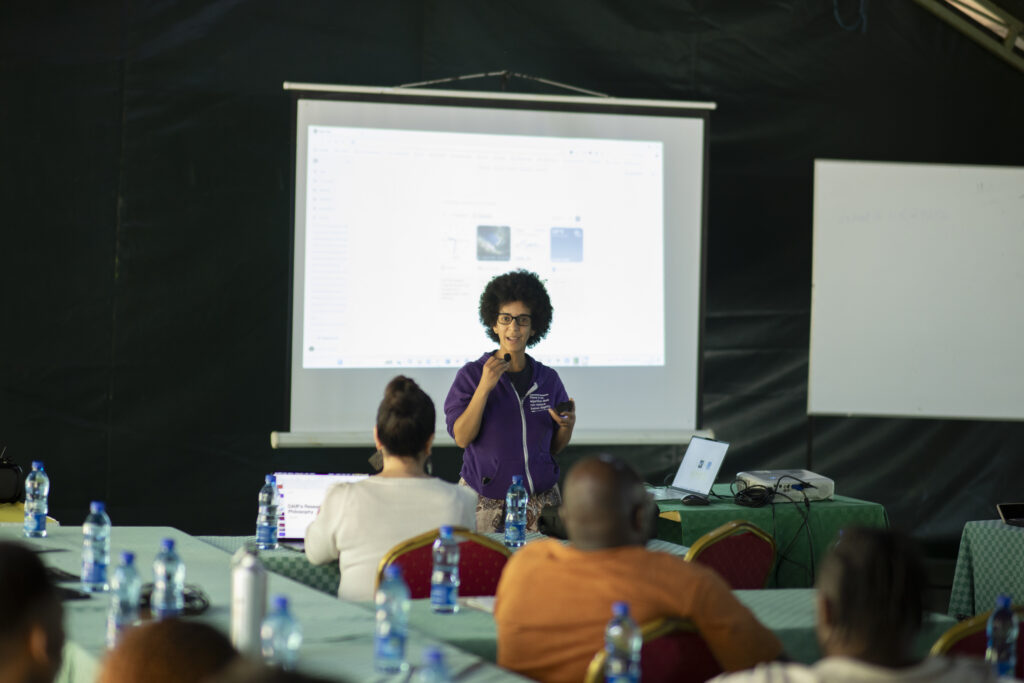
Some months later, Gebru founded DAIR as a distributed research institute. Today, it has more than 20 staff across 10 countries, including technologists, journalists and organisers, as well as people whose expertise comes directly from the harms being investigated.
Embracing human limits
This community-rooted approach rejects the model in which external experts observe people, extract their data and define problems from outside. Instead, those directly affected help determine what should be investigated and how. It also challenges the idea that expertise must be concentrated in a few celebrated individuals.
“There’s a limit to what I, as a human being, can do, and that’s fine, because there are many of us,” Gebru said.
Through the Data Workers’ Inquiry, workers who train and moderate AI systems investigate their own labour conditions. At the same time, Surveillance Watch maps surveillance technologies and the governments, corporations and investors behind them. Both projects make visible a central argument in DAIR’s work: AI does not advance autonomously. Behind apparently intelligent machines are human choices about labour, resources, data, ownership and power.
Rather than distant fears about superintelligent machines, Gebru asks more immediate questions: Who builds these systems? Who pays for them? Where does the data come from? Who does the work? Who benefits and who bears the costs? If fair answers to these concrete questions are given here and now, speculative future risks will not arise.
When science meets responsibility
This approach also shaped Gebru’s response to the war in Tigray, northern Ethiopia, where mass killing, sexual violence, displacement and hunger devastated civilian communities from 2020. She used her platforms to publicly speak about genocide, while DAIR supported research led by survivors and journalists into social media’s role in the violence.
The research contributed evidence to litigation accusing the giant technology company Meta of failing to adequately moderate hate speech and amplifying content that incited ethnic violence in Ethiopia.
Exposing harm, however, is only one pillar of Gebru’s work. The other is cultivating the imagination needed to envision a different technological future.
Reclaiming the future
She challenges the power of technology companies and what she calls “tech bros” to present their preferred future as inevitable. The AI Resist List documents how communities, workers and technologists are already resisting harmful technologies and creating alternatives.
Through the project Possible Futures, DAIR brings artists and creative work into conversations about technology, inviting people to imagine not only what they want to prevent but what kind of future they want instead.
“I feel that our imagination has been colonised, it’s up to us to have a different path,” she said.
Her forthcoming book, Deep Unlearning, due in 2027, explores the assumptions that have shaped her own relationship with science and technology.
For Gebru, the technological future is not something humanity must wait to discover. It is something people have the capacity — and the desire — to make together.