Many of the rights people enjoy today exist because human rights defenders have challenged abuses of power, often at great personal risk. Yet the space for that work is shrinking.
According to the CIVICUS Monitor, only 3 per cent of the world’s population lives in countries where civic space is fully open, while more than 72 per cent live under repressed, obstructed or closed civic space. As repression expands, increasing numbers of defenders are forced to continue their work from exile.
But exile rarely brings complete safety.
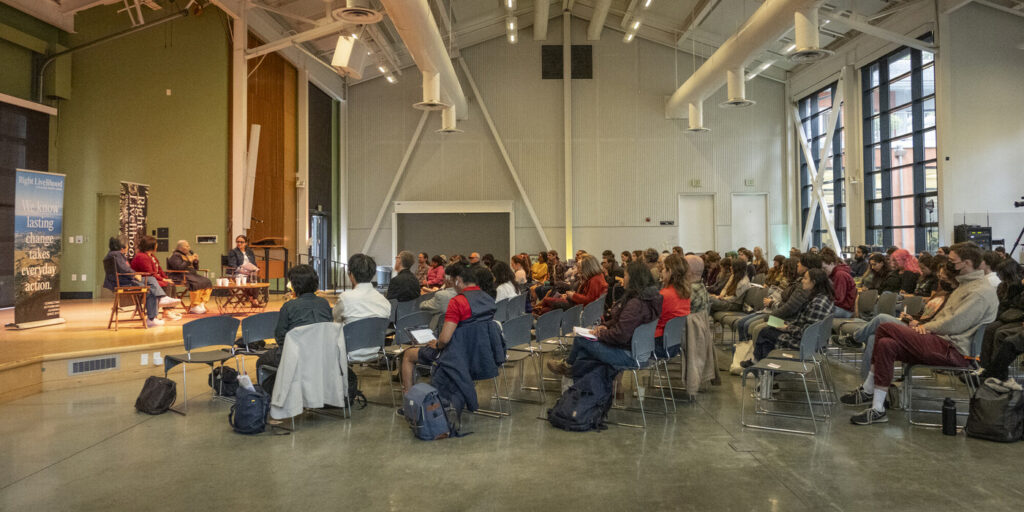
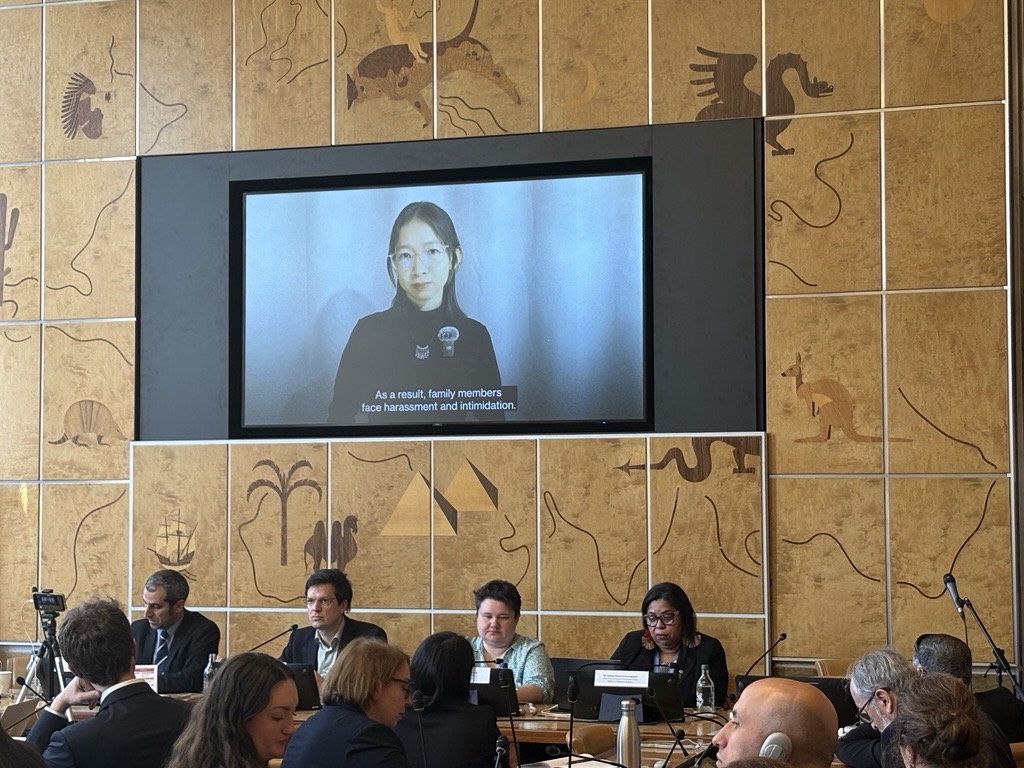
These realities were the focus of a discussion hosted by Right Livelihood at the Palais des Nations in Geneva during the 61 session of the UN Human Rights Council, where defenders and experts reflected on how protection systems must evolve as exile becomes an increasingly common reality for human rights defenders.
Opening the event, Right Livelihood Executive Director Ole von Uexkull stressed the importance of ensuring defenders can continue their work even after they are forced to leave their countries.
“It is crucially important for the international human rights system that these people remain essential voices in documenting abuses and engaging with international mechanisms.”
Threats that cross borders
Speakers from the Right Livelihood Laureate network described how threats often follow defenders beyond national borders.
Natallia Satsunkevich of Human Rights Centre “Viasna”, which received the Right Livelihood Award in 2020, spoke about continuing her work in exile from Belarus.
“I am still struggling for human rights and democracy in my country,” she said.
“Today, it’s impossible to be a public human rights defender in Belarus: every public activity leads to arrest and repression.”
For many defenders, exile does not end the risks. Families and colleagues back home may face intimidation, while activists abroad remain targets of surveillance and harassment.
Anexa Alfred Cunningham, a human rights defender from Nicaragua, highlighted how repression can extend to entire communities.
“Exile is not protection… Human rights defenders continue to face threats, surveillance, intimidation, legal harassment and reprisals against their family members, and, in our case who work with Indigenous communities, also against our community.”

As this moment shows, beyond formal statements and policy debates, creating spaces for defenders like Natallia Satsunkevich and Anexa Alfred Cunningham to connect and exchange is essential to sustaining their work in exile. This is at the core of “Reconceptualising Exile”, a programme by Right Livelihood and the Global Campus of Human Rights, in collaboration with partner organisations.
Calls for stronger protection
The discussion also addressed the limitations of current protection mechanisms.
Emergency relocation programmes and short-term visas can provide immediate safety, but often fail to offer the stability needed for defenders to rebuild their lives and continue their advocacy over the long term.
In a video intervention, Sun Ratha of Mother Nature Cambodia, the environmental movement awarded the Right Livelihood Award in 2023, urged governments to go beyond expressions of concern.
“I urge member states to move from statements of concern to concrete action,” she said.
“Protection must not end at borders.”
Several members of Mother Nature Cambodia have now spent more than 600 days in prison for their environmental activism.
Rethinking protection in an era of exile
As civic space continues to shrink worldwide, exile is becoming a structural feature of the global human rights landscape.
Participants emphasised that protection systems must evolve to reflect this reality, ensuring that defenders forced from their homes can continue their work safely and effectively.