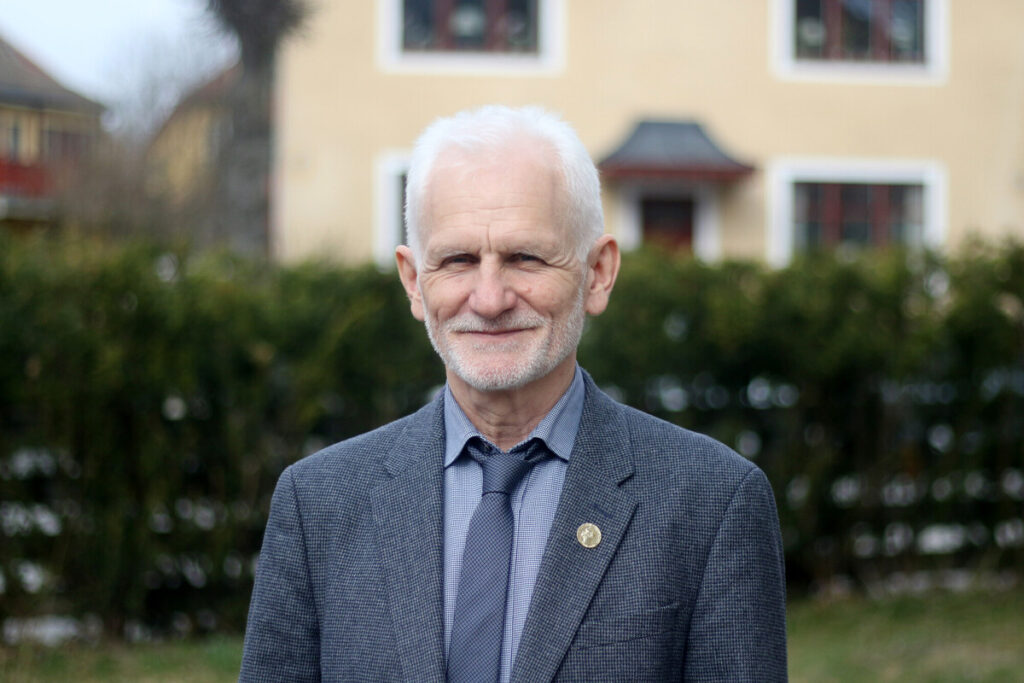
Chilean ecologist and Right Livelihood Laureate Juan Pablo Orrego Silva warns that President José Antonio Kast’s first 100 days in office have accelerated a decades-long model of exploitation and degradation. Setbacks in protective legislation and permissions for extractivism mark the current environmental decisions in Chile and beyond.
The first 100 days of a new administration are often referred to as a “honeymoon period” between the government and its citizens. In Chile, however, environmentalists say the romance never started.
“There is an extractivist frenzy like never before,” said Orrego on the first months of Kast’s mandate.
Kast’s first 100 days: 43 environmental rollbacks
Chile’s new president took office on March 11, 2026, and less than a week later, he announced the rollback of 48 decrees coming from the previous administration. 43 of them are environmental measures. There were complaints and protests on the streets. Yet, the government has shown little sign of reversing course.
The rollbacks include protected areas, biodiversity regulations, climate adaptation instruments, pollution standards and environmental rules developed over years of technical work and public consultation.
“The offensive is completely regressive,” stated Orrego, who received the Right Livelihood Award in 1998 “for his personal courage, self-sacrifice and perseverance in working for sustainable development in Chile”. Nearly three decades later, he continues to work at the front of the environmental NGO Ecosistemas.
Also active and long-serving, Ecosistemas’ fellow environmental organisation Chile Sustentable has just launched a report on Kast’s first 100 days for the environment. It argues that the withdrawal halted key instruments designed to address biodiversity loss, pollution and climate change, while creating uncertainty around environmental governance and public participation. The report also notes that many of these regulations were developed over more than a decade, as a result of years of scientific work, public consultation and cross-party policy development.
The report raises concerns about legislative initiatives designed to accelerate investment projects, simplify environmental permitting procedures and reduce opportunities for communities to challenge decisions affecting their territories. It concludes that many of the proposed changes prioritise regulatory simplification over environmental safeguards.
Extractivism across Latin America and the Global South
Orrego pointed to four industries as having the greatest impact on Chilean ecosystems over the past decades: large-scale mining, industrial fishing, vast pine and eucalyptus plantations alongside agro-industrial monocultures, and the salmon farming industry. Certainly, environmental exploitation didn’t start last March. However, there’s a clear decision to move forward with that destructive trend.
The developments unfolding in Chile are not singular but part of a deeper pattern that extends across many other countries.
“Latin America and the entire Global South is still tied to colonial extractivism,” Orrego said.
“Resources are extracted from our territories for the benefit of others. At the same time, local ecosystems and communities bear the costs,” Orrego said, bringing as an example the case of Anglo-American, Glencore and Rio Tinto megamines in Chile, the leading minerals suppliers to the European arms industry.
When environmental protections and public participation are portrayed as obstacles to growth and investment, there is no honeymoon possible. At least, not for ordinary people.
Read more: Laureate Raúl Montenegro on Argentina’s case under Javier Milei