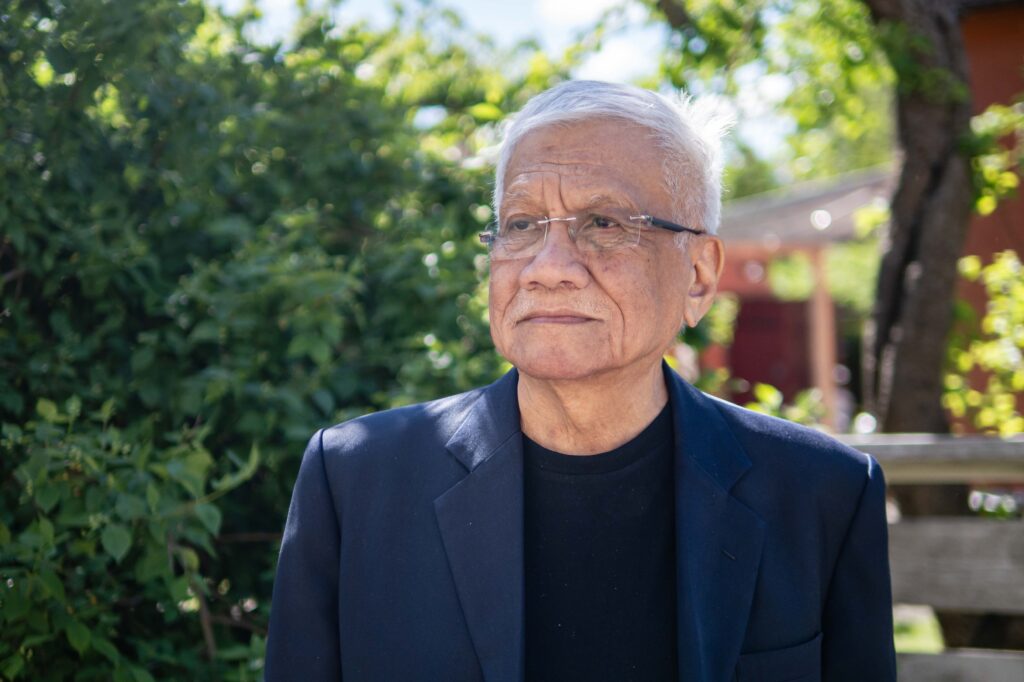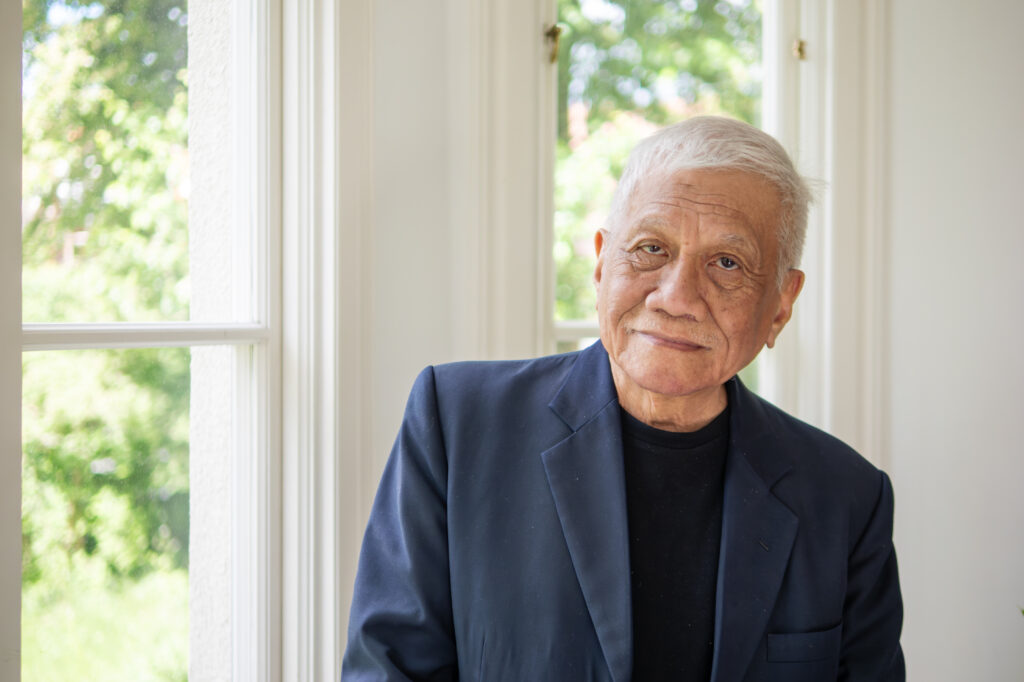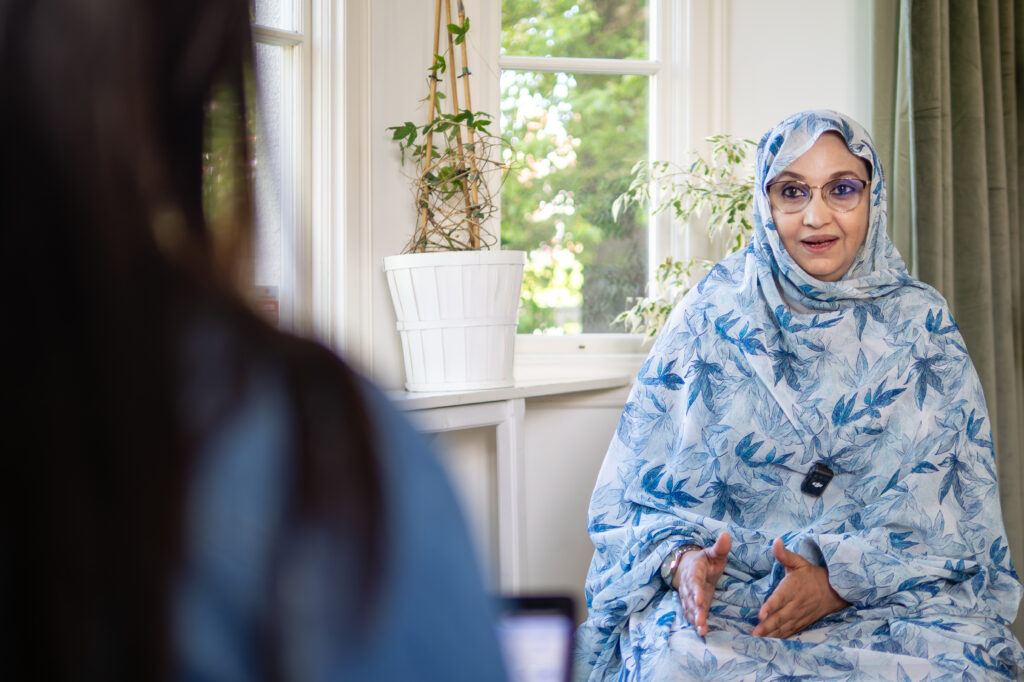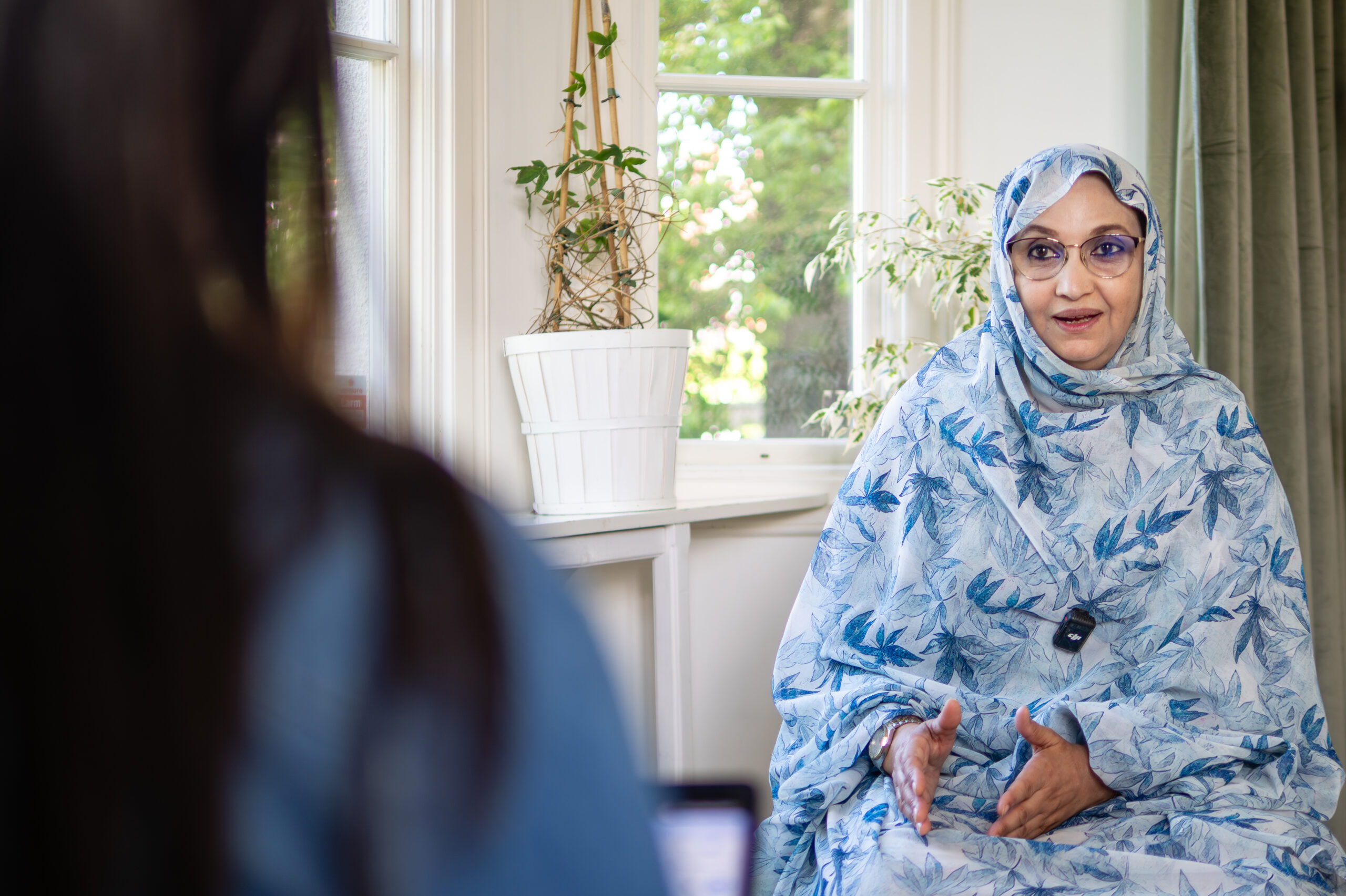
When asked to close their eyes and imagine home, most people would reach for a familiar recipe, song or smell. Aminatou Haidar reaches for something different. “I see the prisons, the torture, the arbitrary detentions, the daily repression — even against children, women and the elderly,” she told Right Livelihood during a recent visit to Stockholm.
Haidar is a nonviolent activist and human rights defender from Western Sahara. She received the Right Livelihood Award for her decades of peaceful resistance to Morocco’s illegal occupation: a struggle that has cost her her freedom, her health, and very nearly her life. She spoke with us about her people as they near their breaking point.
Western Sahara has been under Moroccan occupation since 1975, making it Africa’s last colony. The territory is home to approximately 600,000 people who have never had a say in their home’s governance. Moroccan settlers continue to concentrate wealth and opportunities, pushing Sahrawis deeper into poverty, driving young people to flee in record numbers, and steadily eroding their faith in peaceful resistance and the international community.
“[Morocco] continues with its torture, its violence against protesters, continues with arbitrary detention, and with harsh sentences against detainees,” Haidar said. “It continues with its policy of marginalising the Sahrawis, while priority access to education and job positions is given to Moroccan settlers.”
Young people are feeling the impact of these tactics with a new urgency.
“Now, there are not many young people,” Haidar explained. “They are either abroad, in prison, or affected by drugs. It is a serious strategy by Morocco to put an end to Sahrawi resistance.”
Many young Sahrawis are forced to flee due to a lack of economic opportunities. Morocco encourages settlers to displace Sahrawis from their own land while making life extremely difficult for those who remain. In fact, several generations have also grown up as refugees, with over 170,000 Sahrawis being forced to live in neighbouring Algeria alone.
“Today, we represent less than 25 per cent of the population,” Haidar said. “We are a minority in our own land. And it is a strategic Moroccan policy to flood the territory with Moroccan settlers and give them opportunities in every sector … This is condemning the Sahrawi people to poverty in their own land.”
The situation is even worse for activists like Haidar who speak out against the occupation.
“We are dismissed from our jobs for being activists,” she explained. “Even our children and family members cannot get a position. This is retaliation. Morocco takes revenge — even on our families — to silence our voices, but also to terrorise others so they do not speak out against the occupation.”
The Sahrawi people have been waiting more than fifty years for the United Nations to hold a referendum to decide their fate. With no progress in sight and living conditions worsening, many Sahrawis have lost faith in peaceful resistance and the international community.
“Everyone is now saying, ‘What was taken by force cannot be recovered without force,’” Haidar said. “It is very unfortunate because I wish a nonviolent solution could be found. The international community still does not have the will to say no to the Moroccan occupation and to give the Sahrawi people the chance to choose their own future.”
With the Sahrawis’ trust in the UN depleted, Haidar holds out hope that the media and everyday people raising Western Sahara’s profile will push the international community to act.
“Visit the occupied territories of Western Sahara to see with your own eyes the real situation in which the Sahrawis live,” she said. “Raise your voices to put an end to this injustice, so that the international community finally has the will to resolve this conflict.”