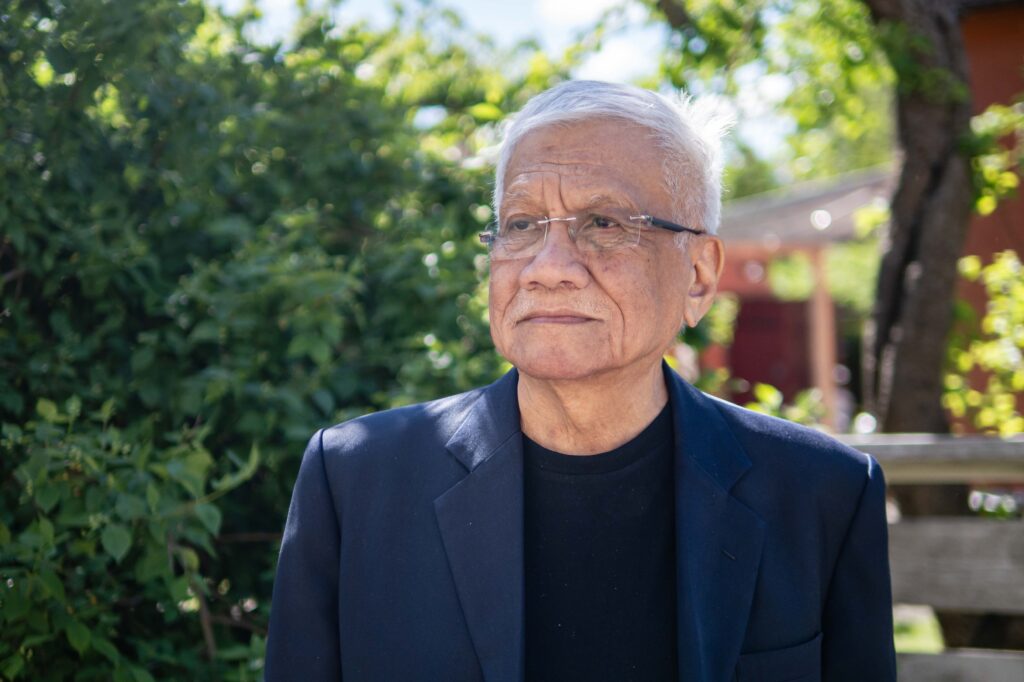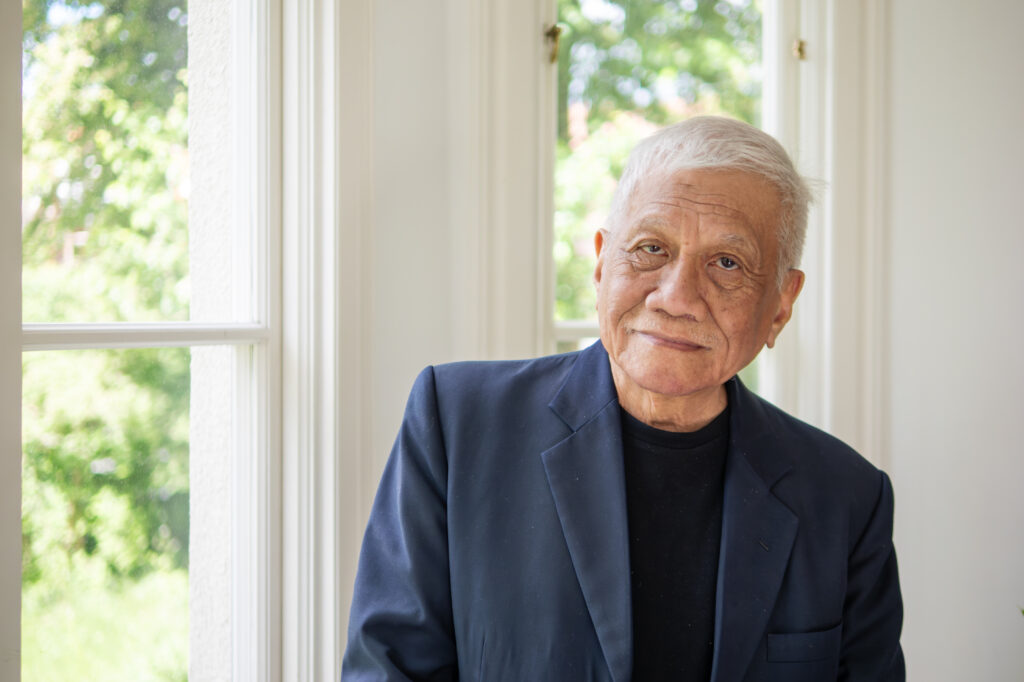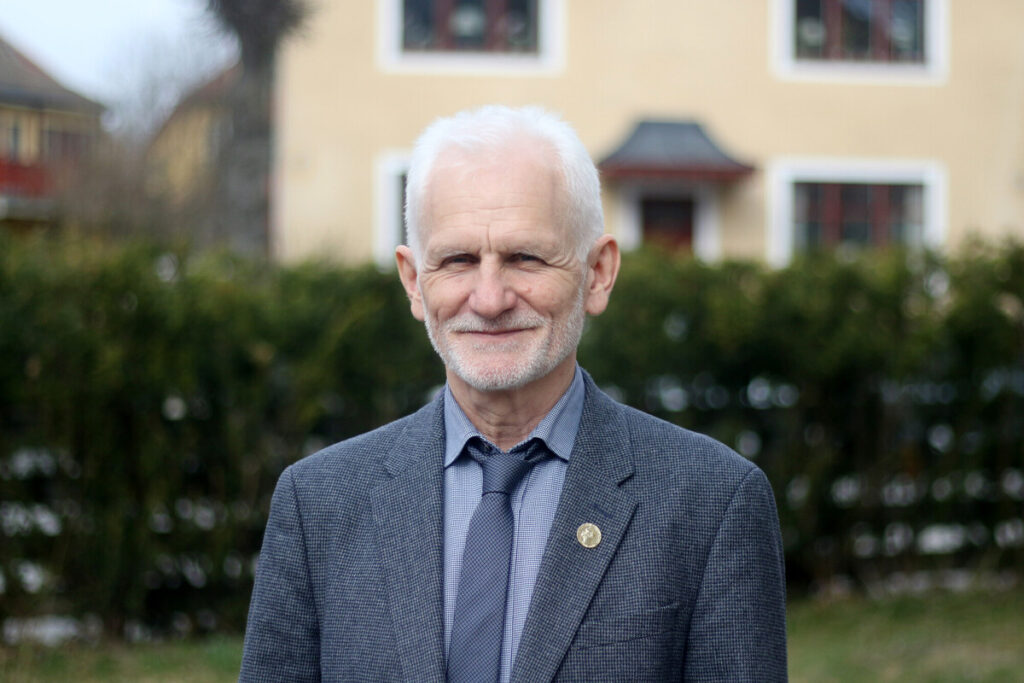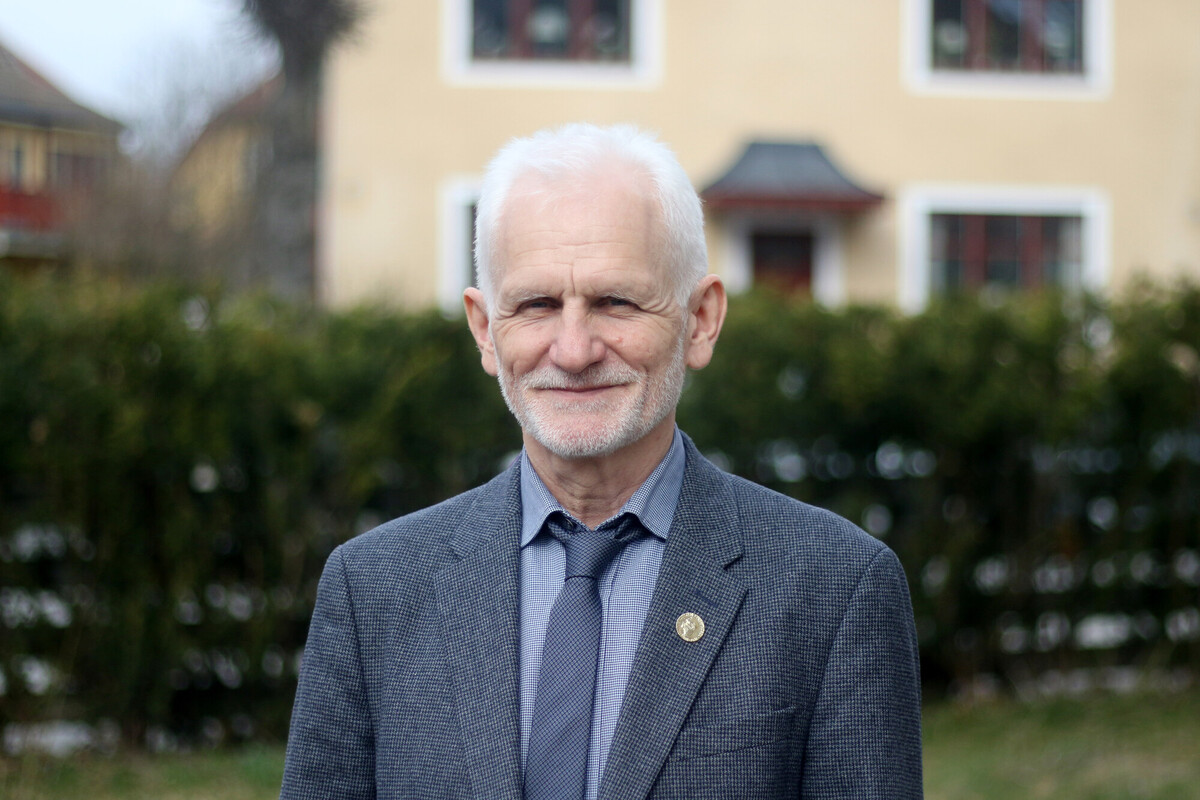
For Right Livelihood and Nobel Peace Prize Laureate Ales Bialiatski, incarceration meant being held within walking distance of his own apartment while the world outside collapsed into war.
On July 14, 2021, human rights defender Ales Bialiatski was arrested by Belarusian authorities alongside several of his colleagues. It was not the first time.
“This was my second arrest,” he recalled, “so there was a strong sense of déjà vu in many ways. Especially during the investigation and the trial, everything felt very familiar, as if it were repeating itself. Like going back to the same school, to the same classroom for a second time.”
For nearly two years, his trial dragged on in Minsk, the city he had spent his entire life in. The detention centre was a ten-minute walk from his front door.
“I was held not far from my home, from the apartment where I live, literally a ten-minute walk away in Minsk,” he said. “So in a way, there was even a feeling of being at home.”
Isolated from his family, with all correspondence with the outside world forbidden, Bialiatski found himself mentally tracing familiar routes through the city.
“I had walked that street dozens, hundreds of times. I often imagined how I could just run from the GUM department store to Victory Square, and I would already be home.”
The trial ended as it began: conducted entirely in Russian, with no Belarusian translator permitted. Bialiatski was sentenced to ten years in a penal colony.
“There were punishment isolation cells, a kind of prison within a prison,” he said. “There was a denial of medical care and torture by cold. In practice, you could not sleep because of the cold, and it constantly and severely affected your body. Everything was aimed at destroying your human dignity and undermining your health.”
Then came an even darker period. Russia invaded Ukraine in February 2022, and Bialiatski found his powerlessness unbearable.
“It was a complete sense of helplessness,” he said. “What can you do in this catastrophic situation? Because that world, fragile as it was, had genuinely collapsed.”
Cut off from outside news, receiving only state television from Belarus and Russia, he could neither speak nor act: “You couldn’t say anything because your voice couldn’t be heard. You could not influence the situation in any way. That was the most terrifying period.”
What sustained him, Bialiatski explained, were small signs that the outside world was watching.
“Letters didn’t get through, only official media,” he said. “But even the small fragments that did reach us showed that the world had not forgotten us, that there was support. That thousands of people were thinking about us and doing something for us.”
Bialiatski was released in 2025 as part of a broader prisoner exchange. Since then, he has been piecing together just how sustained the support was.
“Every day I am learning more and more,” he said. “It was truly a wave of solidarity, not just with my colleagues and me, but with all the victims of political repression in Belarus.”
But that wave, he was quick to stress, cannot stop now. Nearly a thousand political prisoners remain behind bars in Belarus.
“Belarus is not a grey zone,” Bialiatski said. “It is a real European country with a population of around 9 million people, and it is part of the European community. Belarus must not be forgotten. We must achieve the release of all political prisoners. We must achieve an end to repression. We must achieve structural changes in Belarus.”
The repression continues, but so does he.
Key facts about Ales Bialiatski and political repression in Belarus
Ales Bialiatski is a Belarusian human rights activist. In 1996, he founded the Minsk-based Human Rights Center “Viasna” to support political prisoners — the country’s leading non-governmental organisation for documenting human rights abuses and monitoring elections. He received the Right Livelihood Award alongside Viasna in 2020. Bialiatski went on to receive the 2022 Nobel Peace Prize jointly with fellow Right Livelihood Laureates Memorial of Russia and the Center for Civil Liberties from Ukraine.
In July 2021, Ales Bialiatski was arrested on the trumped-up charge of tax evasion. This charge was later dropped, and Bialiatski was instead accused of smuggling and violating public order, for which he was sentenced to 10 years in prison. All of these charges were fraudulent attempts by Belarusian authorities to silence his work as a human rights defender.
Ales Bialiatski was released on December 13, 2025, as part of a prisoner exchange involving 123 Belarusian political detainees. Belarus freed the prisoners following negotiations with the United States, which lifted sanctions in return.
Despite the December 2025 prisoner exchange that freed 123 detainees, hundreds of political prisoners remain behind bars. As of May 25, 2026, there are 841 political prisoners in Belarus.