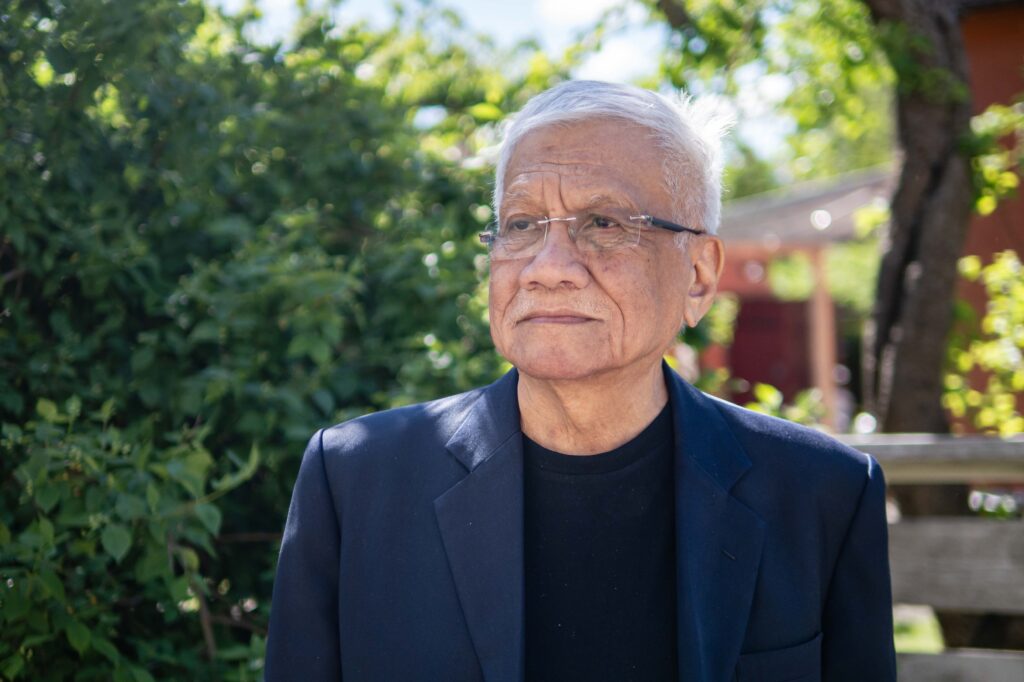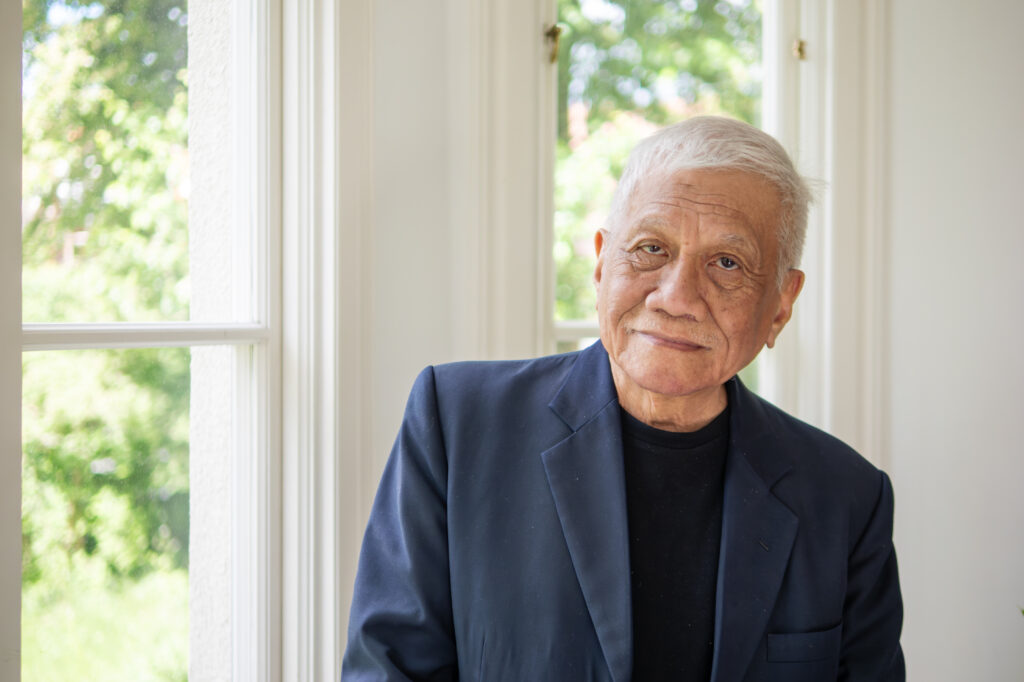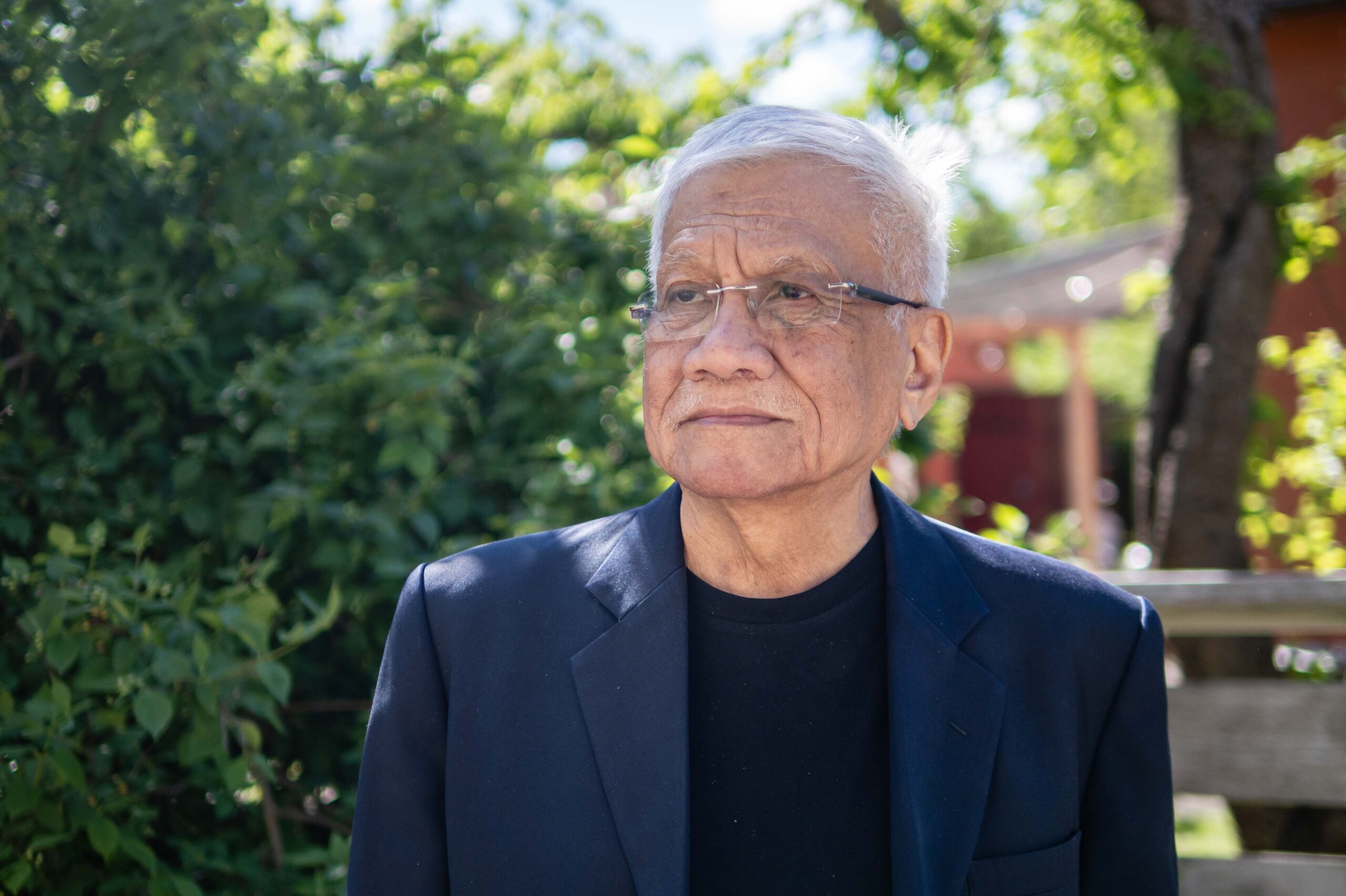
When Walden Bello arrived in Stockholm in May 2026, it was to reconnect with a fellow activist from the Philippines pro-democracy movement of the 1970s and 80s, and to revisit the city where he received the Right Livelihood Award in 2003. In the decades since, he has remained a leading voice on the global left: an author, former member of the Philippine Congress, and lifelong activist. We sat down to talk about what set him on this path, the importance of conviction, and his advice for young people finding their way into activism.
On receiving the Right Livelihood Award
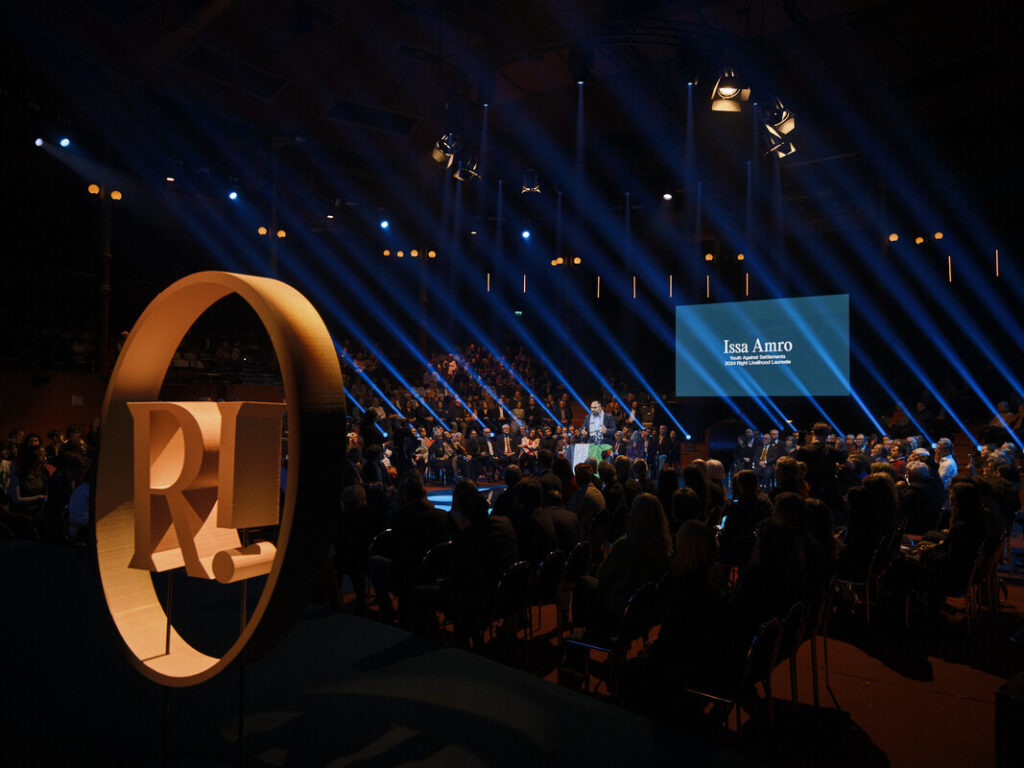
For Bello, the Award arrived at a meaningful moment. Right Livelihood was known for being forward-looking, he explained, and for recognising anti-corporate, pro-ecological positions from the Global South before they were popular.
Becoming a Laureate made him feel that he was on the right track, even if his views were controversial. The effect on his career has been long-lasting.
“It has granted me and my views a great deal of legitimacy,” he said.
Being a Laureate also deepened ties with fellow recipients, especially Canadian water-rights activist Maude Barlow, with whom he worked on the International Forum on Globalisation.
“We’re quite close,” he said. “We consult occasionally with each other, so that’s a good friendship that has lasted both before and after the Right Livelihood Award.”
The moment that made him an activist
Bello did not set out to be an activist. He was a PhD student at Princeton when, by complete happenstance, everything changed.
Walking to class one day in 1970, he stumbled upon a protest against the United States’ invasion of Cambodia. Curiosity drew him in, but when the police arrived, his instinct took over.
“I joined the crowd,” he said. “And when the police came, they started hauling off activists in a very brutal fashion, and for some reason I just jumped into the chain.”
He found himself linked arm-in-arm with two eminent historians as they were taken away by the police. As a foreign student, he knew getting arrested could lead to deportation.
But in that moment, he felt something clarify.
“This is what I was meant to be: an activist, whatever the consequences,” he said. “Ever since then, I think my perspective on life became that you just didn’t sit, but you try to make things happen.”
Holding fast to his values
Since that pivotal day, Bello has spent decades channelling his beliefs into action. He has campaigned for democratisation, denuclearisation, localisation, demilitarisation, and sustainability, among other topics.
After decades of activism — campaigns won and lost, parties joined and left, movements that rose and faded — how does he keep going? For Bello, the answer lies in conviction.
“We just have to stand by our belief that people are more cooperative than competitive,” he said. “That’s not something you prove by reason. You stand by that because that’s your basic values, and then you build movements around that, not conceding to the politics of hatred.”
A clear example of this mindset in action is fellow Laureate Greta Thunberg, he said, who has sailed flotillas across the Mediterranean with other young people despite knowing that they will be stopped, arrested, and abused. “It’s not an irrational act; it’s an act of faith.”
Staying true to his values has also meant knowing when to leave. Over his career, Bello has walked away from two parties, the Communist Party of the Philippines and the social democratic Akbayan, when he felt they were no longer aligned with his principles.
“You just have to be guided by your values, and not just become a cog in a machine,” he said.
A message to young activists
To young people who want to take up activism but feel overwhelmed by the scale of the problems, Bello offers straightforward advice: start anywhere.
“They should start on any issue, local or global, and not expect that there is a well-constructed paradigm they can look to,” he said. “I think they should just start with whichever issues motivate them, and go on from there.”
Activism, he insists, is not a rational decision; it is something you do because your values demand it.
“Certainly, in my own experience, there wasn’t a formula,” he said. “All I knew was that the police force was beating up young people, and my values said ‘no, I cannot allow this’.”
At 77, Bello has turned to memoir to make sense of his activism journey. His memoir, Global Battlefields: My Close Encounters with Dictatorship, Capital, Empire, and Love, was published in 2025.
“Writing my memoir was trying to make sense to myself, trying to make sense of my life, whether it was worth living,” he said. “And at the conclusion of the memoir, I said, okay, yes, it was worth living.”
He hopes it might serve as a guidepost for younger readers, though he holds that hope lightly.
“It might be thrown into a garbage bin by people at this point in time, but maybe another generation might pick it up and say, ‘Hey, this makes sense’ — who knows.”